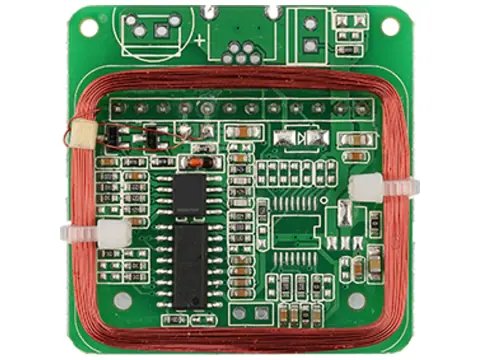
125 kHz EM4100 Reader Module with TTL, Wiegand 26 or RS232
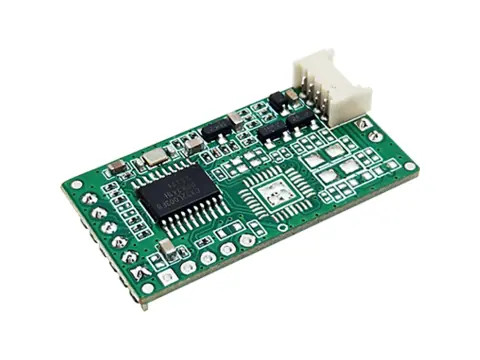
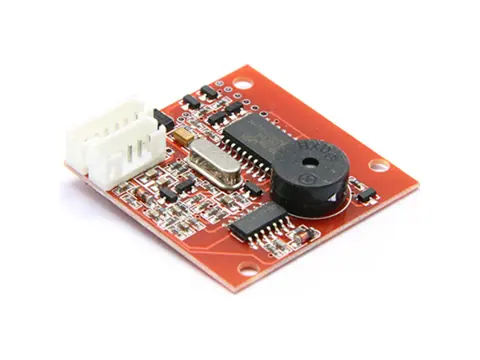
40 × 40 mm board-level reader for EM4100/TK4100 cards, ordered with TTL UART, Wiegand 26 or RS232 output, plus card-present and buzzer/LED drive pins.
Send us your controller model, card type and install environment. We'll shortlist compatible hardware and quote within 24 hours.
EM-family reader modules with UART, Wiegand or RS232 choices and onboard or external antennas. Check the actual credential protocol and signal levels before selecting a replacement board.
40 × 40 mm board-level reader for EM4100/TK4100 cards, ordered with TTL UART, Wiegand 26 or RS232 output, plus card-present and buzzer/LED drive pins.
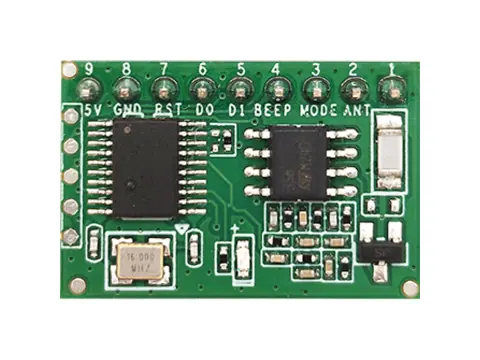
30 × 16 × 8.9 mm EM4100-family reader with a 3.3 V TTL UART, auto or command-triggered reading and serial firmware upgrade, driven by an external 490 µH antenna.
Dual-band OEM reader board that passes 125 kHz EM4100/TK4100 and 13.56 MHz MIFARE, DESFire EV1 and NTAG card numbers to a controller as Wiegand 26 or Wiegand 34.
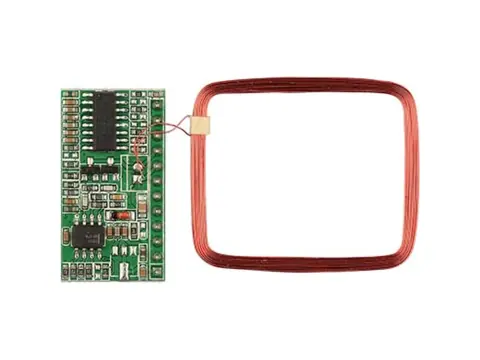
32.5 × 17.5 mm EM4100/TK4100 reader board with an external coil antenna, supplied with TTL UART or Wiegand 26 output for space-limited devices.
24.3 × 16 × 11.8 mm, 2.1 g low-frequency module with an external antenna that reads EM4100-family credentials at 0–8 cm and reports over Wiegand or 5 V UART.
The LF range reads EM-family 125 kHz cards and fobs. Module size, antenna arrangement and output vary: some use an external coil, while LF-120 includes an onboard antenna. LF-110 adds a dual-frequency configuration rather than making every LF module dual-frequency.
Choose the electrical interface from the host design. TTL UART and RS232 are different signaling systems, and Wiegand delivers a card number rather than a general command channel. Verify output format and signal levels before wiring a module into an existing product.
Do not assume every credential labeled 125 kHz uses the same protocol. If a legacy card population includes a different format, evaluate the appropriate multi-technology option with sample cards. The LF chip comparison helps distinguish read-only credentials from programmable chip uses.
Compare Wiegand, OSDP and RS485 reader interfaces: wiring, cable limits, AES-128 Secure Channel and steps for a compatible access-control migration.
125 kHz cards are cheap but easy to clone; 13.56 MHz cards add memory and, on DESFire-class chips, AES security. Compare range, chips, security and migration.
Wiegand 26-bit is an even parity bit, 8-bit facility code, 16-bit card number and odd parity bit. Convert card numbers to hex and back with the calculator.
Elevator card readers for car panels and lift lobbies: anti-clone encrypted cards, QR codes for visitors, Wiegand or RS485 output to the floor controller.
Turnstile card readers, QR scanners and face terminals for tripod, swing and speed gates, with Wiegand, RS485, RS232 or TTL output to the gate board.
Build an RFID asset tracking system: on-metal, ceramic and tie-on tags matched to each asset, handheld audits, smart cabinets and IP67 HF heads for tooling.
No. Carrier frequency alone does not establish protocol support. Use the credential list for the exact module and test representative cards.
LF-110 lists a dual-frequency 125 kHz/13.56 MHz configuration. Other LF models should be selected from their own listed credential support.
No. Its electrical characteristics and connection must match the module specification. Test the selected coil in the final installation.
Send your card type, interface and quantity. You get a quote, lead time and compatibility notes within 24 hours — samples available for most items.