USB Desktop RFID Readers & Card Encoders

Desktop USB readers and writers for LF/HF enrollment and selected card-memory tasks. Keyboard, command and multi-protocol options must be chosen for the host application and credential.

5 product families · samples available · reply within 24 h
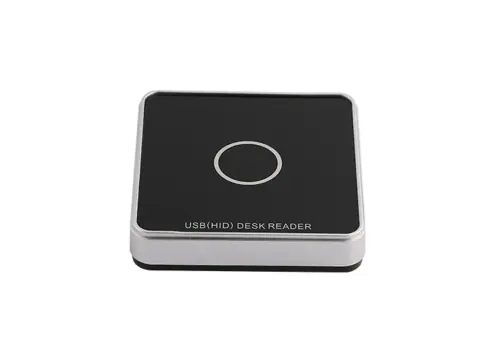
PC-140

Dual-Frequency USB RFID Reader/Writer, HID/CDC Switchable

One desktop unit for 125 kHz EM and 13.56 MHz MIFARE, DESFire, ICODE, CPU and NFC Forum tags, with switchable USB HID/CDC modes and active or command-driven reading.

125 kHz + 13.56 MHzISO/IEC 14443A/B, 15693, 18092USB HID / CDC, switchable
Details →
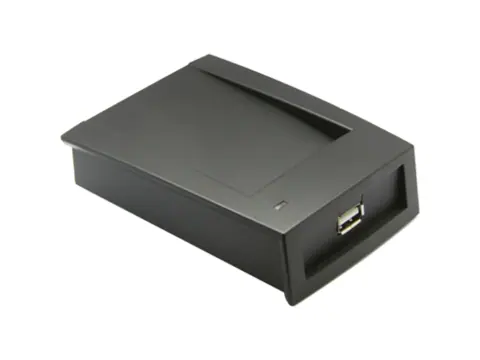
PC-110

USB RFID Reader/Writer, 125 kHz & 13.56 MHz, Metal Frame

Metal-framed USB desktop reader in five versions, from 125 kHz EM and 13.56 MHz UID read-only up to MIFARE sector, DESFire, NTAG and ICODE read/write. Driver-free.

125 kHz or 13.56 MHz (by version)ISO/IEC 14443A/B, ISO/IEC 15693USB, driver-free
Details →
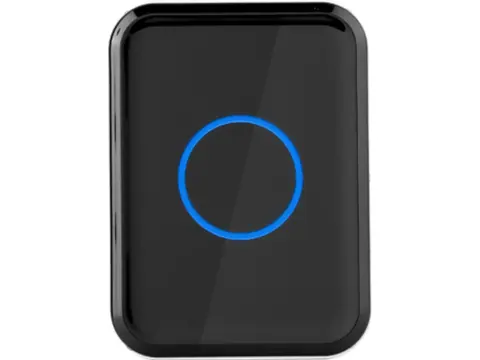
PC-150

13.56 MHz USB NFC Reader/Writer with Dual SAM Slots

HF desktop reader/writer for MIFARE, DESFire, FeliCa, ICODE, CPU and NFC Forum Type 1–5 tags, with two SAM slots, 0–4 cm range and switchable USB HID/CDC.

13.56 MHzISO/IEC 14443A/B, 15693, 18092, 78162
Details →
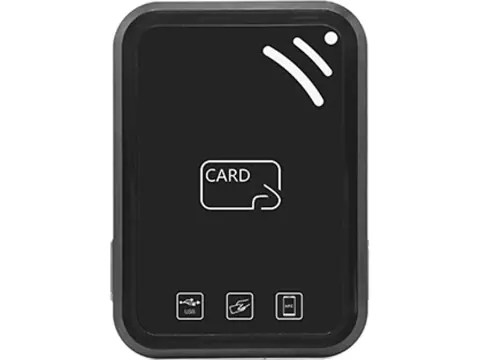
PC-120

Desktop RFID Card Reader/Writer, USB, 107 mm Square

Square 107 mm USB desktop reader: 125 kHz EM or 13.56 MHz UID read-only versions, plus encoders for MIFARE Classic sectors, CPU cards, DESFire EV1 files and NTAG.

125 kHz or 13.56 MHz (by version)ISO/IEC 14443A/BUSB, driver-free
Details →
PC-130

Compact USB RFID Card Reader, 125 kHz, 13.56 MHz or Dual

Entry-level USB desktop card reader in 125 kHz EM, 13.56 MHz UID and dual-frequency versions; one dual model also writes MIFARE Classic sectors. Driver-free.

125 kHz, 13.56 MHz or dual (by version)ISO/IEC 14443A (13.56 MHz)USB, driver-free
Details →
Buyer's notes

How to choose usb desktop readers

PC desktop products range from compact number-capture readers to read/write configurations and a multi-protocol issuing unit. Frequency and supported operations differ by variant, so choose the credential first and then verify the required command or output mode.

Keyboard emulation enters the number in the active software field. Match decimal or hexadecimal presentation, byte order and any selected data to the entrance reader. PC-140 lists switchable HID/CDC operation, while PC-150 adds dual SAM slots for issuing workflows that actually use compatible secure modules and software.

A USB connection alone does not establish PC/SC support or guarantee an encoding function. Test the selected model with the host software and credentials. The USB enrollment guide explains how to compare the desktop result with the access controller’s stored record.

Learn & apply

Guides and applications

Elevators

Elevator Access Control Readers

Elevator card readers for car panels and lift lobbies: anti-clone encrypted cards, QR codes for visitors, Wiegand or RS485 output to the floor controller.

Frequently asked questions

Does USB HID mean the reader can encode cards?

No. Keyboard output captures a number. Encoding needs the reader/writer’s supported command mode and suitable host software.

Which desktop model lists two SAM slots?

PC-150 lists two SAM slots. A working issuing setup also requires the appropriate SAM configuration, authorized keys and software.

Will the desktop automatically output the same number as the door reader?

Not necessarily. Match the data source, byte order and display format, then compare both readers using the same sample credential.

Sourcing usb desktop readers?

Send your card type, interface and quantity. You get a quote, lead time and compatibility notes within 24 hours — samples available for most items.

Email us
sales@valenid.com

Request a quote

Tell us what you need — an engineer replies within 24 hours with pricing, lead time and compatibility notes.

We reply within 24 hours on working days. Your details are used only to answer this inquiry — see our privacy policy.