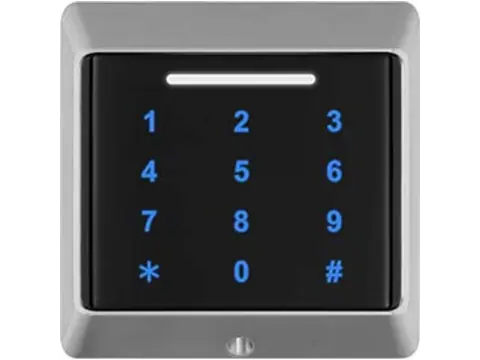
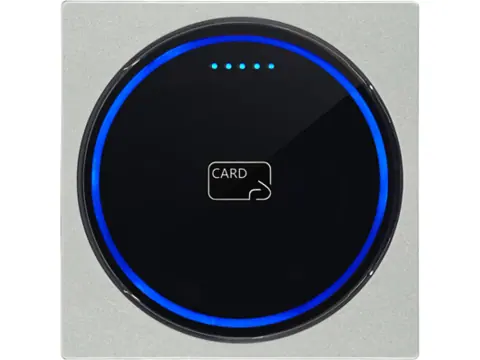
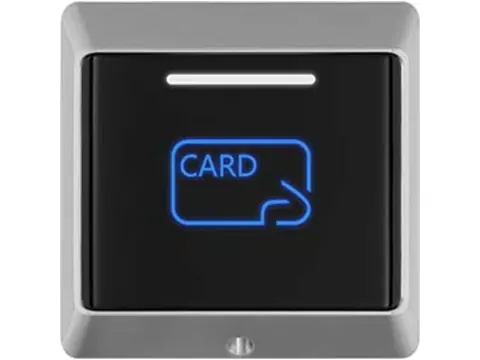
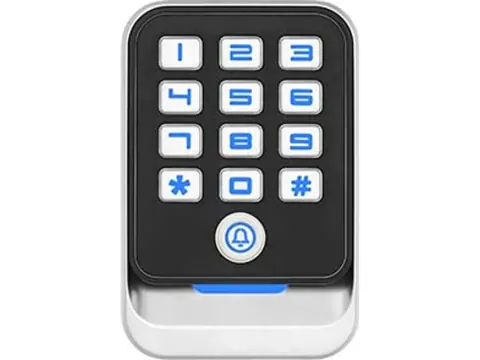
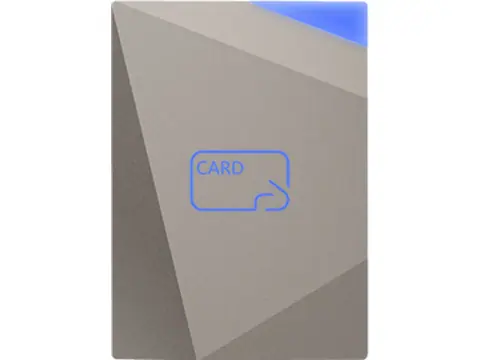
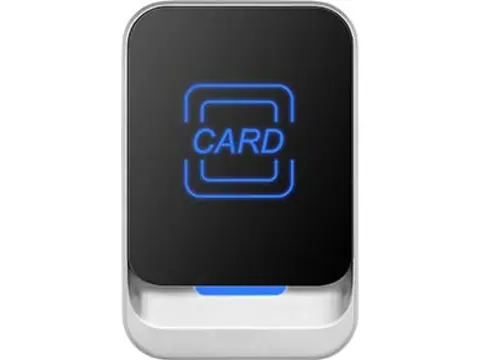
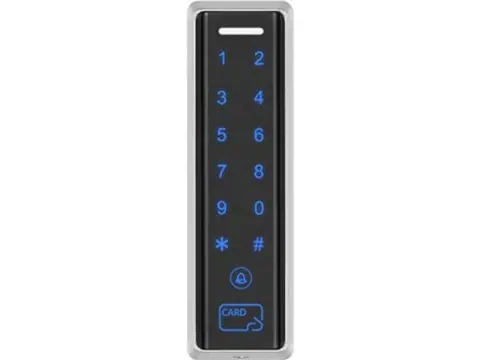
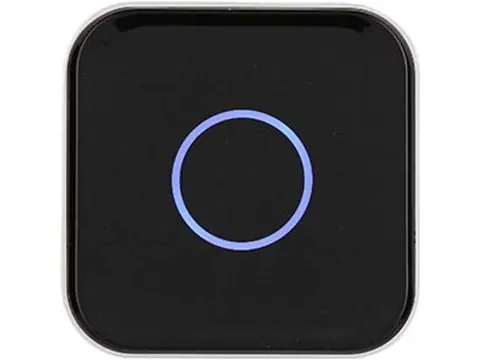
Apartment building access control has three jobs: keep outsiders out of shared doors, let residents, staff and visitors in without friction, and make a lost or unreturned credential worthless the moment it is deleted. For most multifamily and rental properties, that means encrypted 13.56 MHz readers with a matched fob set on lobby and amenity doors, QR codes or cloud controllers for visitors and short-stay guests, and long-range UHF tags for resident vehicles at the gate. We supply the readers, controllers, credentials and door hardware for each zone, checked as one compatible set.
The problem: copied fobs and credentials you can’t control
Many buildings still run 125 kHz EM-type fobs, or 13.56 MHz fobs that the reader identifies by UID alone. Both present a fixed number with no cryptography. Key kiosks and inexpensive duplicators write that number onto rewritable blanks (T5577 chips at 125 kHz, UID-changeable cards at 13.56 MHz) in seconds.
For a property manager, that has practical consequences. Copies keep working after a tenant moves out. Short-stay guests can hand duplicates to others. The event log can’t tell a copy from the original, and deleting the number also locks out the legitimate resident.
The fix is a reader that authenticates the card cryptographically, paired with a card set issued under the site’s own keys. The strongest common choice is MIFARE® DESFire® EV2/EV3 with AES-128 and diversified keys. MIFARE Classic sector encryption stops simple UID copies, but its Crypto1 cipher is broken and some commercial duplicators can recover its keys, so treat it as a deterrent rather than protection against a determined attacker. Our MIFARE Classic vs DESFire guide covers the trade-offs and migration.
Re-issue comparison: keys, basic fobs and encrypted fobs
| Event |
Mechanical keys |
125 kHz or UID-only fobs |
Encrypted fobs (site key set) |
| Resident loses a credential |
Rekey affected cylinders, cut new keys |
Delete the number, issue a new fob |
Delete the number, issue a new fob |
| Tenant leaves without returning it |
Rekey |
Delete the number |
Delete the number |
| Unauthorized copies circulate |
Rekey every cylinder the copied key opens |
Copies share the original’s number; deleting it also locks out the holder, and new fobs can be copied again |
UID-only copies are rejected; AES-based cards such as DESFire EV2/EV3 also resist key-recovery tools |
| Replacement stock |
Key blanks and a locksmith visit |
Generic blanks, which anyone can also buy |
Encoded with your key set; keep the key configuration documented and under your control |
| Main cost driver |
Locksmith labor and hardware per incident |
Low fob price, but repeated re-issues and no control over copies |
Higher fob price; re-issue only for genuine loss or turnover |
How a typical apartment system is laid out
Each door follows one chain: credential → reader → controller → lock and exit hardware.
- Credential. Encrypted card or fob for residents, a dynamic QR code for visitors, a face template for staff, a UHF windshield tag for vehicles.
- Reader. Mounted on the unsecured side; outputs Wiegand 26/34 or RS485 to the controller.
- Controller. Decides who may enter, when, and logs each event. Put it on the secure side of the door, because Wiegand between reader and controller is unencrypted.
- Lock and exit hardware. A fail-safe maglock or drop bolt, an exit device, a door closer and a 12 V DC power supply with a fire-alarm input.
Buildings with a LAN usually run readers into TCP/IP door controllers in a comms room, managed from one software database. Small rentals, detached gates and buildings without cabling suit door-level devices instead: standalone keypads, QR controllers or 4G cloud controllers that store users and switch their own relay.
Hardware selection by door and zone
| Location |
Recommended hardware type |
Key spec to check |
| Main lobby entrance |
Encrypted 13.56 MHz reader (keypad optional) + networked controller + maglock or drop bolt |
Card technology and key set; Wiegand format; IP rating if exposed |
| Side, stairwell and garage pedestrian doors |
Encrypted reader or IP-rated standalone keypad |
Weather rating; egress hardware; door status monitoring |
| Amenity rooms (gym, pool, laundry, roof) |
Encrypted reader on a networked controller |
Schedules per user group; door status monitoring |
| Package room or visitor gate |
QR code access controller or QR + card reader |
Dynamic, time-limited QR support; output to the controller |
| Short-term rental or building without a LAN |
4G cloud or Bluetooth controller |
LTE band support for your country; offline behavior; management platform |
| Staff, management and plant rooms |
Face recognition terminal with card reader |
Liveness detection; template storage; consent requirements |
| Community or parking gate |
Long-range UHF reader + windshield tags |
Regional UHF band; lane separation; Wiegand byte selection |
| Management office |
USB desktop reader/encoder |
Same card technology and key set as the readers |
Order encrypted anti-clone readers together with cards and key fobs from the same key set, so every later batch works first time.
Visitors, short-term rentals and staff doors
Visitors and deliveries. A QR code access controller reads time-limited dynamic QR codes issued by your management platform, so a visitor or courier gets a code that stops working when its window closes. Avoid static QR codes on anything important; a screenshot is a copy.
Short-term rentals and LAN-free sites. Bluetooth and 4G cloud controllers let you issue and revoke access remotely, with no fob to hand over or recover. Confirm LTE band compatibility with your country before ordering the 4G variant, and ask what keeps working if the connection drops.
Staff and service doors. Face recognition terminals remove shared cards from management offices and plant rooms. Biometric data is regulated in many places, including as special-category data under the GDPR and under state laws such as Illinois BIPA, so get consent, set retention rules and keep a card alternative. Don’t make face the only way residents can enter.
Resident vehicles. Long-range UHF windshield tags open community and garage gates without drivers reaching for a card. Lane layout and hardware are covered on our RFID vehicle access control page.
Integration and installation notes
- Egress. Maglocks are fail-safe. A lobby door needs a request-to-exit sensor or button, a manual release that cuts lock power directly, and a fire-alarm release through the power supply. In the US, NFPA 101 and the IBC set the conditions; in Europe, fire doors must stay within their EN 1634-1 test evidence, and electrically controlled exit systems fall under EN 13637. The authority having jurisdiction decides.
- Power. Size the 12 V DC supply for all locks and readers plus headroom, with battery backup where the design requires locks to stay secured during outages.
- Closers and covers. A door closer makes a released door relock; rain covers protect readers at gates.
- Migration. Dual-frequency readers let old 125 kHz fobs and new encrypted fobs work side by side during changeover. Set a cut-off date, because copies of old fobs keep working until they are disabled.
- Listings. Where the specification calls for UL 294 or other listings, request evidence for the exact model.
Per-door bill of materials (lobby door)
Per building: encrypted cards or fobs from one key set, plus spares; a USB desktop encoder for the management office.
Why source from one supplier
- Matched readers and credentials. Readers and fobs are ordered against one key set and format, so later batches read first time.
- Compatibility checked. Send your controller model and card format; we confirm output settings and test before dispatch.
- Samples first. Test a reader and fob set with your controller before rolling out.
- Mixed orders. Readers, controllers, cards, locks, exit buttons and power supplies in one quote, so every door kit arrives complete.
Next steps
Tell us the number of buildings and doors by type (lobby, amenity, gate), your current credential technology and controller model, how many residents need fobs, and if the site needs QR visitor access, 4G controllers or vehicle lanes. We’ll propose a per-door bill of materials. Request a quote and we’ll reply within 24 hours.