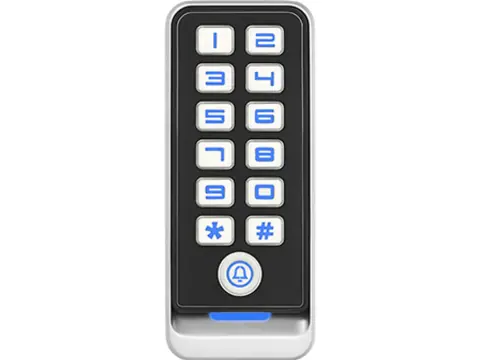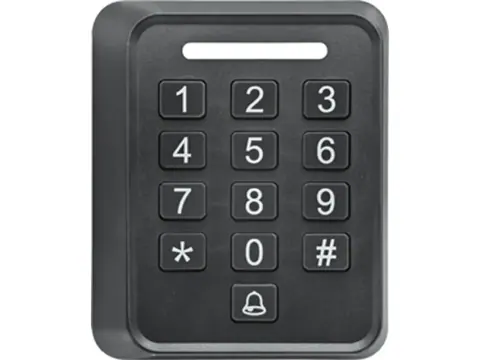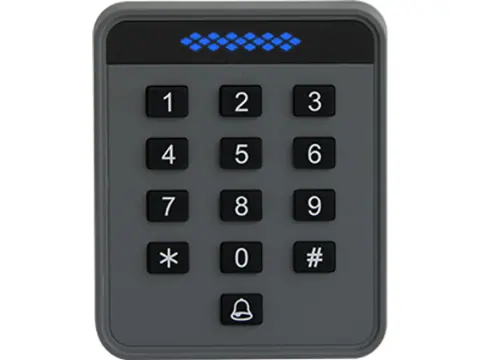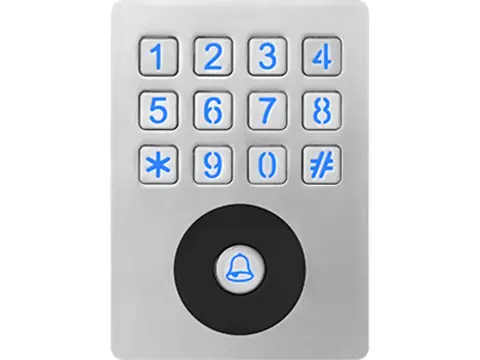
IP67 Waterproof Metal Access Control Keypad
All-metal IP67 keypad controller with 5,000 users, a short-circuit-protected lock relay and Wiegand output. Reads 125 kHz EM or 13.56 MHz MIFARE at 3–5 cm.
Send us your controller model, card type and install environment. We'll shortlist compatible hardware and quote within 24 hours.
Single-door card and PIN controllers with local enrollment and a lock relay. Indoor, metal, mullion and IP-rated versions let installers choose the housing separately from credential and capacity requirements.
All-metal IP67 keypad controller with 5,000 users, a short-circuit-protected lock relay and Wiegand output. Reads 125 kHz EM or 13.56 MHz MIFARE at 3–5 cm.
IP65 metal keypad with physical keys that stores 5,000 users and drives the lock relay itself. 125 kHz EM, 13.56 MHz MIFARE and encrypted CPU-card versions.
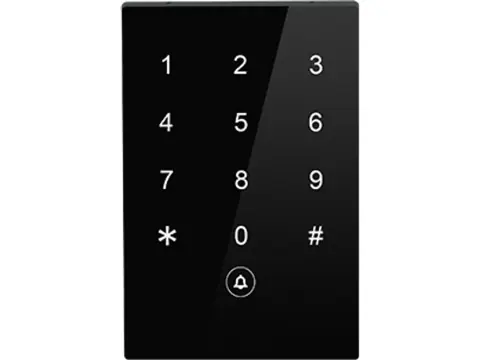
Touch-panel keypad controller that stores up to 5,000 users and switches its own lock relay. Choose 125 kHz EM, 13.56 MHz MIFARE or an anti-copy 13.56 MHz build.
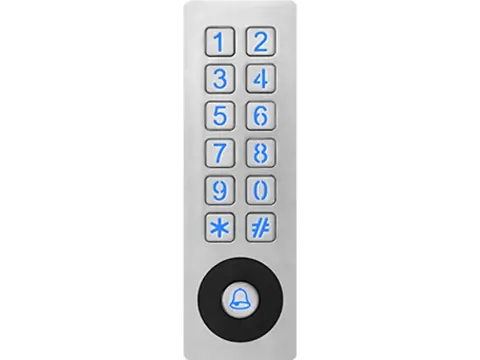
IP67 all-metal mullion keypad, 160 × 50 mm, with 5,000 users, a lock relay and Wiegand output. Reads 125 kHz EM or 13.56 MHz MIFARE cards at 3–5 cm.
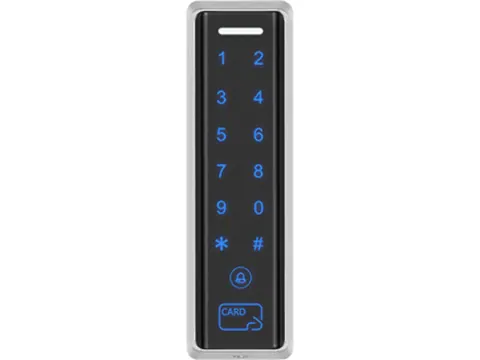
Slim 153 × 45 mm IP65 touch keypad controller for mullions and narrow frames. Stores 5,000 users, drives its own relay and can switch to Wiegand reader mode.
Narrow 138 × 58 mm IP65 metal keypad holding 5,000 users. Opens by card, PIN or both, drives its own lock relay and can switch to Wiegand reader mode.
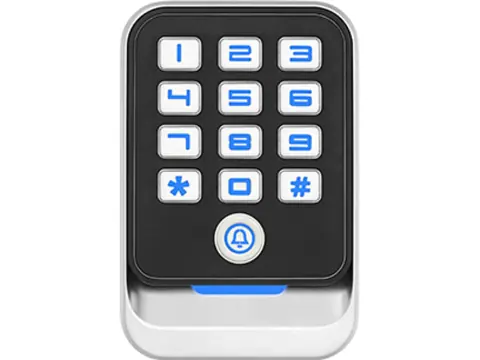
Compact offline keypad controller for 2,000 users, in black or white with no logo. 125 kHz EM4xxx or 13.56 MHz ISO/IEC 14443 A/B versions.
Plastic-housed keypad controller for indoor doors: 1,000 users, card, PIN or card + PIN, a simple 9-wire harness and a white or grey shell.
Standalone keypads combine credential capture, a user database and relay switching in one device. Choose the card variant first: the SK range includes separate 125 kHz and 13.56 MHz configurations. Then choose card-only, PIN or combined verification where that model supports it.
Housing and user capacity vary within the range. SK-180 stores 2,000 users, while several metal SK models list 5,000 users. Check the product table rather than applying one capacity to every keypad. Models without a stated ingress rating belong in an appropriate sheltered installation.
Plan administrator enrollment and reset before installation. Save the master-code procedure, document the lock relay wiring and test a sample credential against the number already enrolled. The standalone keypad programming guide explains the general workflow; the model manual supplies the actual commands.
Compare Wiegand, OSDP and RS485 reader interfaces: wiring, cable limits, AES-128 Secure Channel and steps for a compatible access-control migration.
Maglock wiring with dry-relay COM/NC: keypad and reader diagrams, REX signals, approved egress release paths and manufacturer-specific suppression.
A fail-safe lock releases when power is cut; a fail-secure lock stays locked. Learn which to use per door, how to wire NO/NC, and what egress codes expect.
Plan an RFID vehicle access control system: UHF windshield tags, long-range lane readers, Wiegand controllers and barrier triggering. Lane BOM and samples.
Apartment building access control hardware: anti-clone readers with matched fob sets, QR visitor codes, 4G controllers for rentals and UHF tags for gates.
Turnstile card readers, QR scanners and face terminals for tripod, swing and speed gates, with Wiegand, RS485, RS232 or TTL output to the gate board.
No. Many SK families have separate 125 kHz and 13.56 MHz variants. Select the variant for the cards already on site.
Several SK models provide Wiegand output as well as their relay. Confirm reader-mode operation and output format for the selected model.
No. Enrollment commands, reset methods and supported modes differ. Use the model-specific instructions and test administrative access before handover.
Send your card type, interface and quantity. You get a quote, lead time and compatibility notes within 24 hours — samples available for most items.