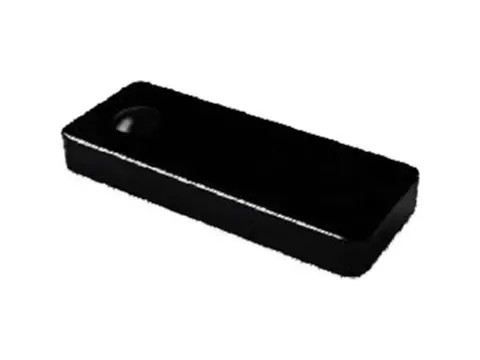
13 m Long-Range ABS On-Metal UHF RFID Tag, 69 × 23 mm
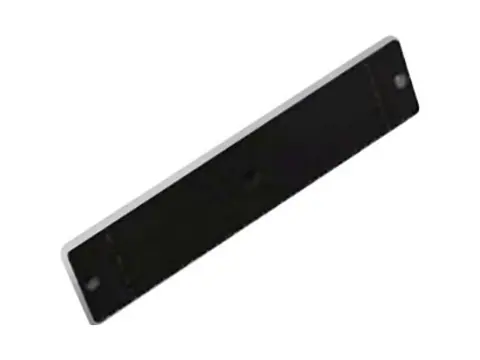
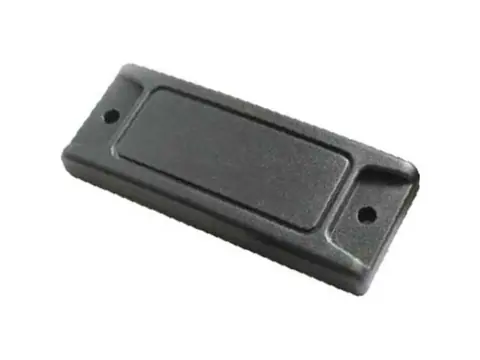
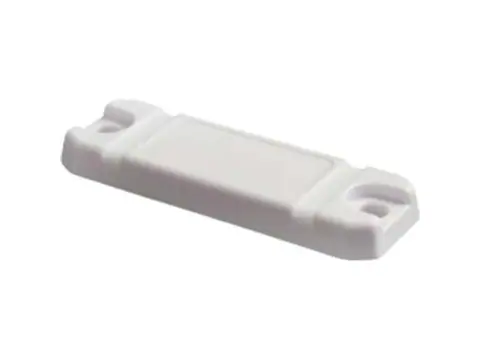
Longest-reading tag in our on-metal range: 13 m on metal with a 4 W fixed reader from a 69 × 23 × 7 mm ABS body. NXP UCODE 8; 902–928 and 866–868 MHz.
Send us your controller model, card type and install environment. We'll shortlist compatible hardware and quote within 24 hours.
Industrial and embedded tags grouped by mounting method and handling conditions: on-metal, ceramic, seal, livestock, laundry and PCB/FPC formats. Match the tag, reader and surface with a sample test.
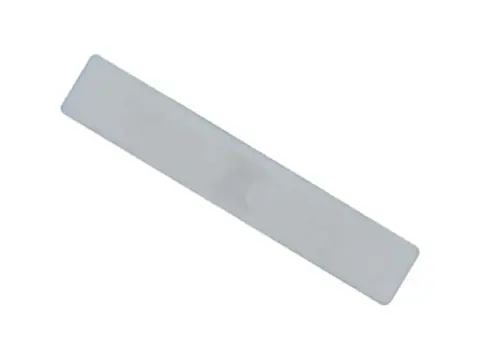
Longest-reading tag in our on-metal range: 13 m on metal with a 4 W fixed reader from a 69 × 23 × 7 mm ABS body. NXP UCODE 8; 902–928 and 866–868 MHz.
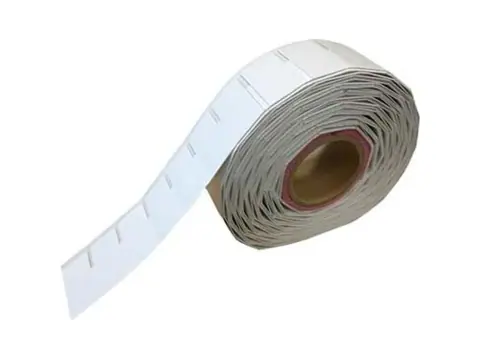
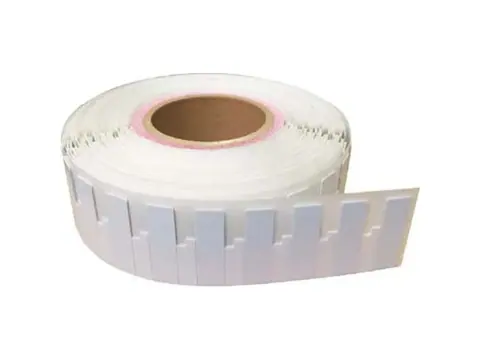
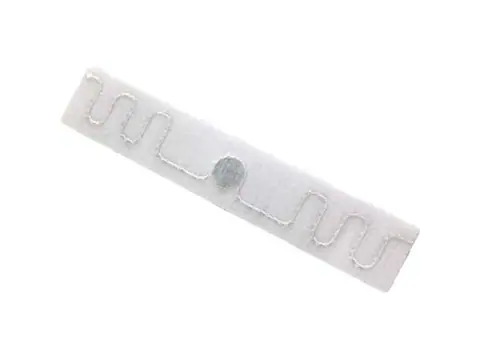
Thin PET on-metal UHF label you can print and encode in-house: 65 × 35 × 1.25 mm, Monza R6 chip, up to 6 m on metal with a 4 W fixed reader.
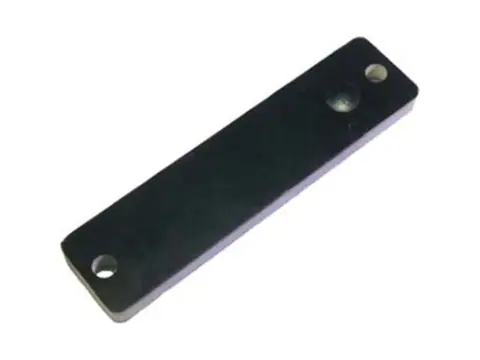
Longest-reading PCB tag in our range: 10 m on metal with a 4 W fixed reader and 6 m with a handheld, in a 90 × 20 × 3.5 mm FR4 body. NXP UCODE 8.
Low-profile FR4 PCB on-metal UHF tag, 52 × 13 × 3.9 mm, NXP UCODE 8. Reads 8 m on metal with a 4 W fixed reader, 3.5 m with a handheld.
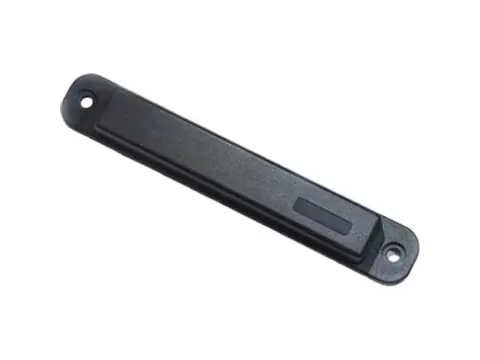
Bar-shaped ABS on-metal UHF tag, 135 × 22 × 12 mm, with an Impinj Monza 4QT chip. Covers 860–960 MHz; 8 m on metal with a 4 W fixed reader.
Narrow printable anti-metal UHF label, 55 × 15 × 1.2 mm: 3.5 m on metal with a 4 W fixed reader and 2 m with a handheld. Monza R6 chip, 902–928 MHz.
Frangible, tamper-evident UHF label for metal assets: 60 × 25 × 1 mm, Impinj Monza R6 chip, 902–928 MHz, 1 m on metal with a 4 W fixed reader.
Rectangular ABS tag for steel assets: 79 × 31 × 9.5 mm, Alien Higgs-9 chip, 860–960 MHz, 5–8 m on metal with a 4 W fixed reader, 2.5 m handheld.
Card-size ceramic UHF tag with an Alien Higgs-9 chip for vehicle and metal-asset ID, rated to 10 m on metal; it breaks if pried off, so it cannot move to another vehicle.
Our smallest ceramic UHF tag at 13 × 9 × 3 mm, with an Alien Higgs-9 chip in US or EU band versions; rated 3.5 m on metal with a fixed reader and 1.5 m with a handheld.
Square 25 × 25 × 3 mm ceramic UHF tag with an NXP UCODE 8 chip for 902–928 MHz systems; reads to 6 m on metal with a 4 W fixed reader and 4 m with a handheld.
Slim 23 × 9 × 3 mm ceramic UHF tag for narrow metal surfaces, with an Alien Higgs-9 chip in US or EU band versions; 4 m on metal with a fixed reader, 3 m with a handheld.
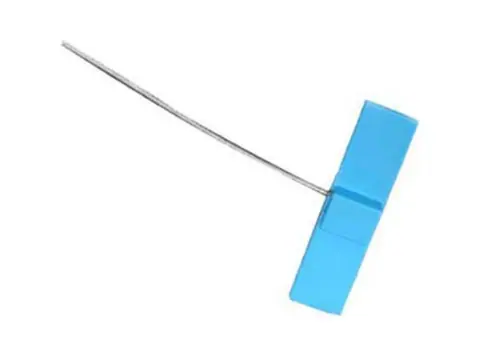
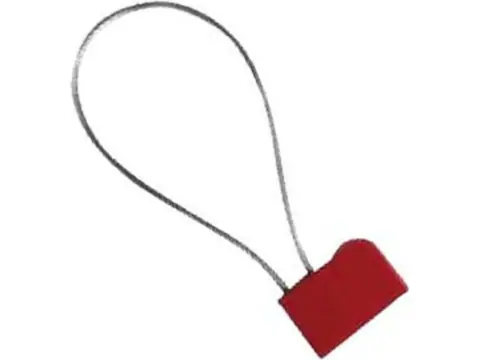
Single-use UHF RFID cable seal with a steel-ball lock and a 280 mm × 1.8 mm steel wire; reads at 5 m on a fixed reader for containers, tankers and trailer doors.
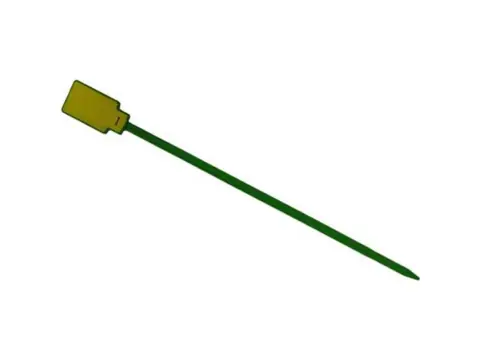
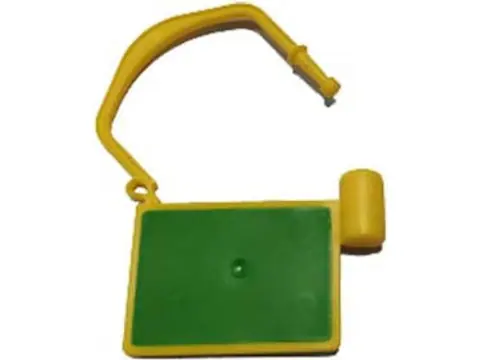
Zip-tie style UHF RFID tag in PP with a 53.5 × 30 × 1.9 mm head and 330 mm overall length, for tying IDs onto bundles, bags and cables; reads at 0.7 m fixed, 0.2 m handheld.
Small single-use UHF cable seal with a 36 × 23 × 11 mm ABS head and 280 mm steel wire, read at close range (0.3 m fixed, 0.1 m handheld) for one-at-a-time checks.
PP archive lock tag with a 44 × 32 × 3 mm tag body and 83.31 mm overall length that clasps onto folders, boxes and document bags; reads at 1.5 m fixed, 0.5 m handheld.
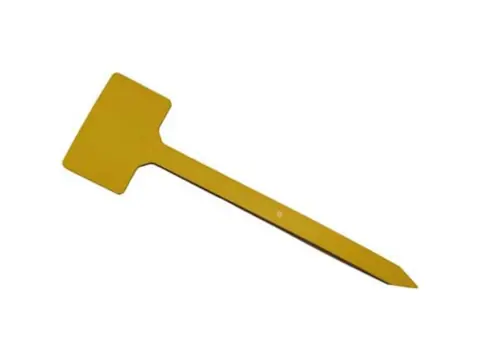
PP plant label with a 100 × 60 × 3 mm head and 360 mm overall length, reading to 10 m on a fixed UHF reader, for breeding trials, nurseries and tree farms.
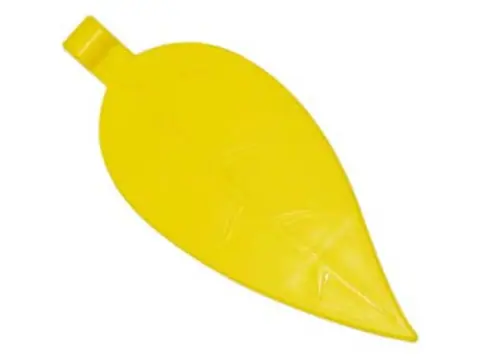
Leaf-shaped PP plant tag with an Impinj Monza 4QT inlay in a 52 × 20 × 2 mm pocket; reads at 7–8 m on a 4 W fixed reader and 1.5–2 m on a handheld.
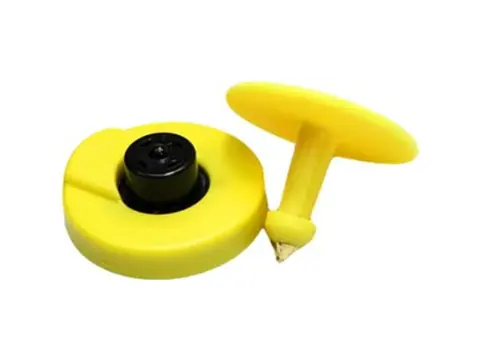
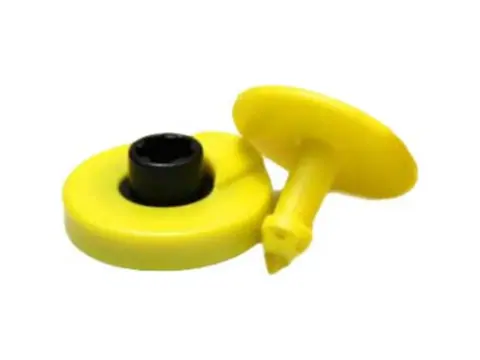
Two-piece UHF RFID button ear tag, Ø30 × 14.6 mm with a closed-hole socket, nylon core and TPU shell; reads at 6–7 m on a fixed reader for group reading at gates and races.
Through-hole UHF RFID button ear tag, Ø30 × 13.2 mm, nylon skeleton in a TPU shell; the Alien Higgs-9 chip reads at 6–7 m on a fixed reader and 0.5 m on a handheld.
Sewable fabric UHF laundry tag, 70 × 15 × 1 mm, rated for 200+ industrial washes and 60 bar; NXP UCODE 8 chip, 902–928 MHz, 7.5 m fixed-reader range.
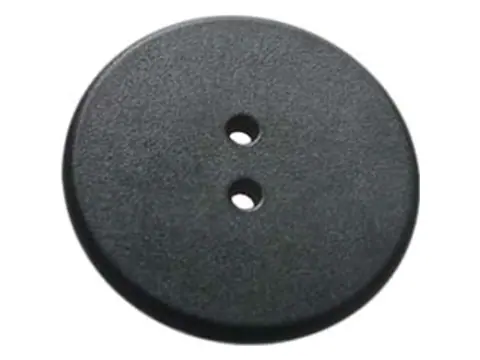
Ø25 × 2.65 mm PPS button laundry tag with an Alien Higgs-9 chip, rated 860–960 MHz for US and EU readers; 0.9–1.2 m fixed-reader range.
Waterproof, heat-resistant silicone laundry tag, 55 × 12 × 2.7 mm, with an Alien Higgs-9 chip tuned for 902–928 MHz; reads to 4 m on a fixed reader.
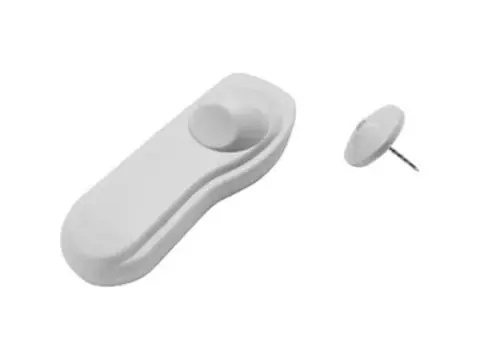
Reusable 73 × 26.5 × 20 mm ABS hard tag that adds UHF RFID stock counting (860–960 MHz, 2–5 m) to AM 58 kHz or RF 8.2 MHz EAS gates. Magnetic lock.
Dual-technology ABS hard tag, 72 × 30 × 20 mm, with a hook lock: UHF RFID (860–960 MHz, 2–5 m) for inventory plus AM 58 kHz or RF 8.2 MHz EAS.
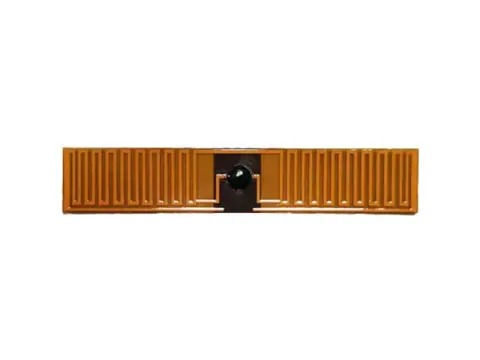
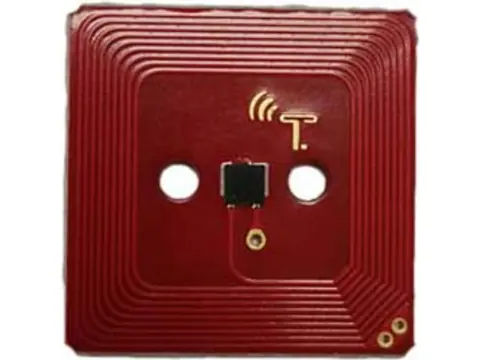
A 49 × 9 mm flexible FPC UHF tag for embedded identification, with listed distances of 9 m for a reader and 3 m for a handheld.
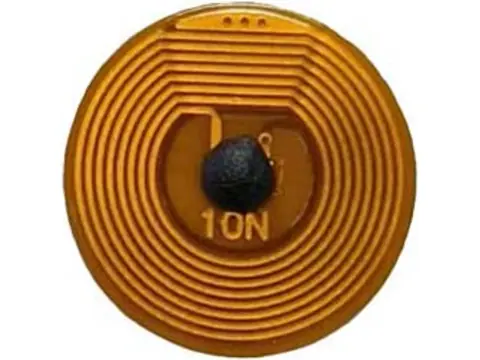
A flexible circular 15 mm NTAG213 tag for OEM NFC identification, with a listed phone reading distance of 20 mm.
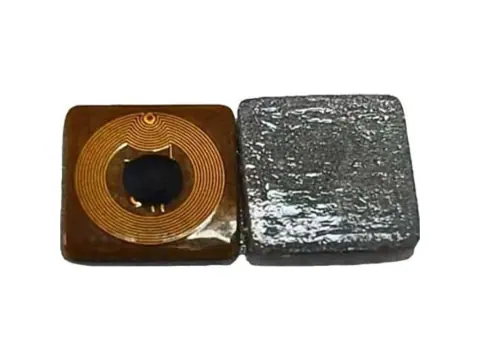
A 6 × 6 mm NTAG213 FPC tag with a very close 3–5 mm listed NFC-phone read distance when placed on metal.
A rigid 18 × 18 mm PCB RFID tag using the listed F08 chip at 13.56 MHz, with a 25 mm NFC-phone reference distance.
A round 17 mm rigid PCB NFC tag with NTAG213 at 13.56 MHz and a listed NFC-phone reading distance of 20 mm.
A rectangular 16 × 11 mm NTAG213 PCB tag for embedded NFC identification, with a listed phone reading distance of 15 mm.
Choose an RFID tag around the object it will identify. Surface material, available space, attachment method and handling can matter more than the chip name. The categories here separate tags built for metal assets, tie-on applications, textile workflows, livestock and integration inside another product.
On-metal tags and labels use constructions intended for steel surfaces, including housed, PCB and flexible label formats. Ceramic tags provide rigid options for compact metal assets. A small footprint may reduce the usable read distance, so compare the stated test conditions and evaluate the tag on the actual object.
Seal and cable-tie tags attach without an adhesive mounting face. Decide whether the task needs a one-time seal, a tie-on identifier or a visible removal indication. These are distinct functions; identification does not itself prevent tampering.
Laundry tags cover button, silicone and textile formats, alongside retail EAS/RFID hard tags. Wash-process suitability and anti-theft functionality are separate selection questions. Livestock ear tags likewise need a fit and read-point assessment for the intended animal-management workflow.
Most industrial formats here use UHF, while the embedded PCB/FPC range also includes HF/NFC choices. Match frequency and protocol to the reader, and choose the ordered band for the destination. A phone-readable NFC tag is a different purchase from a UHF inventory tag.
Published range depends on the reference reader, antenna, tag mounting and surroundings. Validate the required event with representative assets or loads, including tag orientation and neighboring objects. Agree encoding, visible numbering and installation method only after that evaluation. The on-metal selection guide and read-range guide explain why a catalog figure cannot replace a test of the proposed installation.
Compare UHF RFID reader bands by country, including US, EU, UK, China, India and Japan. Understand ERP, EIRP, channel conditions and radio approvals.
Wire a UHF reader's D0, D1 and ground to your controller, match 26/34-bit Wiegand, size 12 V power and trigger the barrier by relay. Diagrams included.
Yes, RFID works on metal with tags built for it. See why metal detunes standard tags, compare ABS, PCB, ceramic and label tags, and test read range properly.
Plan an RFID vehicle access control system: UHF windshield tags, long-range lane readers, Wiegand controllers and barrier triggering. Lane BOM and samples.
Plan RFID for warehouse management: fixed readers and circular antennas at dock doors, conveyor tunnels, handheld cycle counts and on-metal asset tags.
Build an RFID asset tracking system: on-metal, ceramic and tie-on tags matched to each asset, handheld audits, smart cabinets and IP67 HF heads for tooling.
Ordinary labels may lose performance on metal. Choose an on-metal construction suited to the surface and test it on the actual asset.
No. Antenna design, size, mounting and the reader system change performance. Compare the complete tag and its stated test conditions.
No. Phones use supported NFC/HF technologies rather than ordinary EPC Gen2 UHF. Choose a listed NFC option when phone reading is required.
Use a controlled sample numbering scheme for evaluation. Confirm RF performance and the required data workflow before approving a volume encoding and labeling specification.
Send your card type, interface and quantity. You get a quote, lead time and compatibility notes within 24 hours — samples available for most items.