Key takeaways
- Match the tag's documented frequency band, attachment method and process limits before comparing read range.
- LT-150 has stated ratings of 200+ industrial washes and 60 bar; those ratings do not apply to LT-130 or LT-140.
- LT-140 and LT-150 are listed for 902–928 MHz only. LT-130 is listed for 860–960 MHz, with a shorter reference read range.
- Heat-resistant, waterproof and sewable descriptions do not establish temperature limits, chemical compatibility or a heat-sealing process.
- Approve samples on the actual textile, laundry program and read conditions, then record the accepted specification in the production order.
Choose washable UHF RFID laundry tags by the actual wash and finishing process, the regional reader band and how the tag attaches to each textile. LT-150 is the fabric option with stated wash-cycle and pressure ratings, LT-140 is a silicone strip, and LT-130 is a rigid PPS button with a wider documented band. Treat all three as sample candidates until their documented limits and test results match your process.
Compare the three laundry-tag candidates
The table separates documented specifications from information still needed for purchasing. A missing rating is not a zero rating, but it also cannot be treated as approval for your equipment.
On small screens, scroll the comparison tables sideways to read all columns.
| Candidate | Construction and dimensions | Documented band and chip | Documented durability | Still needed before process approval |
|---|---|---|---|---|
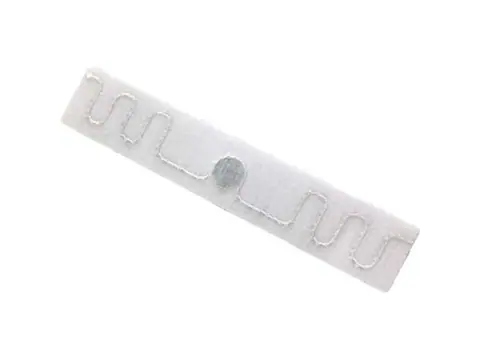
| LT-150 fabric tag | Sewable fabric, 70 × 15 × 1 mm | 902–928 MHz; NXP UCODE 8 | 200+ industrial wash cycles; 60 bar; described as suitable for direct ironing | Rating test conditions; temperature and time limits; chemical compatibility; approved stitch placement; any heat-seal instructions |
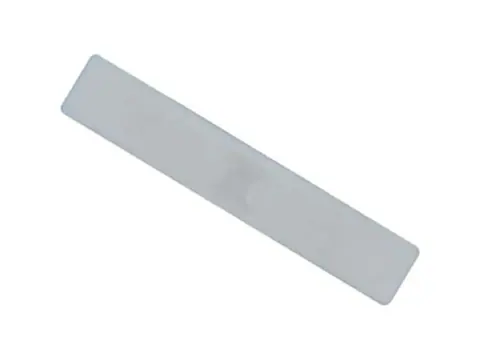
| LT-140 silicone tag | Silicone encapsulation, 55 × 12 × 2.7 mm | 902–928 MHz; Alien Higgs-9 | Described as waterproof and resistant to heat, corrosion and abrasion | Numeric wash life, pressure and temperature limits; chemical list; approved attachment method |
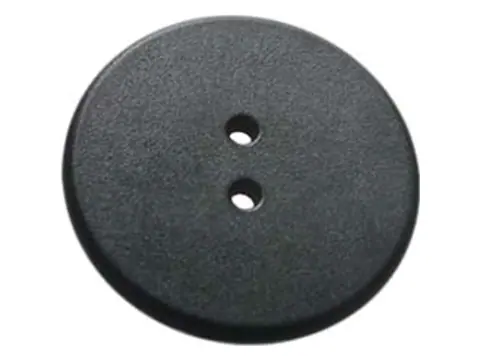
| LT-130 PPS button | Rigid PPS button, Ø25 × 2.65 mm | 860–960 MHz; Alien Higgs-9 | Described as heat-resistant and resistant to repeated rubbing | Numeric wash life, pressure and temperature limits; chemical list; approved attachment method |
All three use EPC Gen2 / ISO/IEC 18000-6C. The current records identify the chips but do not provide a complete memory map or an agreed encoding service specification. Put required EPC length, locking and serialization in the RFQ rather than assuming a chip name settles them.
Keep retail hard tags out of the laundry shortlist. LT-110 and LT-120 have retail EAS/UHF functions; they are not recommended here as washable linen tags. Products sharing the laundry and garment tag category can serve different jobs, and protocol compatibility alone says nothing about wash survival.
Select a format without transferring ratings
Start with LT-150 when a thin, sewable carrier is important and the site uses 902–928 MHz. Its stated wash and pressure figures make it the first candidate to investigate for repeated industrial processing. They still need supporting conditions: the records do not specify maximum wash temperature, allowable chemical concentrations or a complete finishing program.
Consider LT-140 when the silicone strip’s dimensions and encapsulation fit the item. Its qualitative resistance descriptions do not establish a particular hospital disinfection cycle, extraction pressure or skin-contact certification. Request the missing data before treating it as equivalent to the fabric tag.
Consider LT-130 when a rigid button is acceptable and the documented 860–960 MHz band is relevant. A wider band does not make it a substitute for a long-range fabric tag or supply a pressure rating. Check comfort, attachment and the required reading distance on representative items.
Match the country and interpret range figures
LT-140 and LT-150 are listed for 902–928 MHz only; no 865–868 MHz variant is documented. LT-130’s 860–960 MHz specification includes those two bands. Confirm the installation country, permitted reader configuration and exact tag variant using the UHF frequency by country guide; a tag’s bandwidth does not authorize a reader’s transmissions.
The listed reference ranges are:
| SKU | Fixed-reader reference | Handheld reference |
|---|---|---|
| LT-150 | 7.5 m | 2 m |
| LT-140 | 4 m | 2 m |
| LT-130 | 0.9–1.2 m | 0.2–0.3 m |
The fixed-reader records say “4 W” without identifying whether that is conducted power, EIRP or ERP. The handheld figures refer to an R2000-based unit. These figures are product references, not a common controlled comparison or guaranteed distance on wet, stacked linen; request antenna, power, textile, orientation and loading conditions before using them in a specification.
Turn your laundry program into a qualification checklist
“Washable” leaves several different exposures unresolved. Record each stage separately so a short temperature limit, a pressure figure or an individual successful wash does not become an approval for the complete program.
| Process stage | Information to record and confirm |
|---|---|
| Washing and soaking | Peak temperature, exposure time, detergent, bleach or disinfectant, concentration and dosing sequence |
| Water extraction | Spin extraction or press extraction; equipment settings, pressure measurement basis and exposure duration |
| Drying and finishing | Dryer temperature and time; tunnel-finisher or flatwork-ironer contact conditions |
| Ironing | Contact temperature, dwell time, pressure and any protective layer |
| Special treatment | Dry-cleaning solvents, sterilization or autoclave conditions, if used |
| Repeated handling | Folding, abrasion and the mechanical load at the tag’s position |
For LT-150, request the test method behind 200+ washes and 60 bar and whether the steps above were included. “Direct ironing” is documented, but no maximum ironing temperature or contact duration is supplied. Autoclave compatibility, dry-cleaning compatibility and a named chemical-resistance list are not established for any of these three tags by the current records.
Published industry datasheets show why the conditions matter: the 2020 linen-tag example separates drying, ironing, extraction and chemical limits, while the 2026 garment-tag example explicitly excludes extraction presses from its washing conditions. Those are different products. Their temperatures, lifetimes, attachment processes and approvals do not apply to LT-130, LT-140 or LT-150.
Qualify the attachment and the item ID
LT-150 is documented as sewable. Request an attachment drawing that identifies the stitch area and placement, then test the assembled item for retention, comfort and readability. For LT-130 and LT-140, confirm the approved attachment method instead of assuming that a button shape or silicone enclosure specifies one.
Heat sealing needs approval for the exact tag, patch or adhesive and textile combination, including temperature, dwell time and pressure. No such process is documented for these three SKUs. Do not copy another product’s heat-press settings or treat a sewable tag as heat-seal ready.
Agree on the item-identification contract before encoding a production batch. Decide who allocates unique IDs, how they map to customer and item records, whether pre-encoding is required and how duplicate or failed tags are handled. Use the UHF tag encoding guide to specify EPC write and read-back requirements; an EPC identifies an item but is not proof of its physical condition or authenticity.
Run a sample pilot before a bulk order
A useful pilot checks the complete tagged item and workflow. It should include the textiles, attachment positions and process extremes that the production order will encounter, rather than loose tags read on a desk.
- Agree on acceptance criteria. Define required process life, read conditions, acceptable missed or unintended reads and attachment failure criteria before testing. Choose sample quantities and checkpoints to represent the item and process variation.
- Record a baseline. Read back each ID, inspect the attachment and document the tag variant, item type, position and reader configuration.
- Process the assembled samples. Use the actual wash, extraction, drying and finishing sequence. Log exposure conditions and completed cycles; separate any alternative programs.
- Recheck at agreed intervals. Inspect for damage or detachment, verify the original IDs and read realistic individual items, bundles or carts in the moisture state used at your read points.
- Investigate exceptions before approval. Distinguish a failed tag from shielding, orientation, reader configuration or an attachment problem. Record any process or mounting changes and retest the affected cases.
GS1’s Tagged-Item Performance Protocol provides grading definitions, test configurations and a methodology for RFID performance on tagged items. It is a useful reference for defining repeatable RF measurements; it does not provide wash-durability approval for these SKUs. A short pilot also does not prove the full claimed service life—keep test evidence, stated ratings and purchasing acceptance criteria distinct.
For reader placement and the wider installation, see RFID laundry and linen tracking. This guide’s procurement decision is the tag variant and evidence needed before that installation uses it.
Copy this checklist into your RFQ
Send the following with a request for samples and a production quote:
- Destination: installation country, reader frequency profile and any sites that use a different band.
- Items: sheets, towels, uniforms or other textiles; material, attachment location and comfort constraints; drawings or photos where useful.
- Quantity and schedule: quantities per item type, sample quantity, initial production quantity, repeat-order forecast and required delivery date.
- Full process: wash temperatures and durations, named chemicals and concentrations, extraction equipment and pressure conditions, drying, ironing and any special treatment.
- Candidate and attachment: LT-130, LT-140 or LT-150; required variant; stitching, pouch or other proposed method; request approved installation instructions.
- Reading conditions: reader and antenna models, settings, intended distance, item orientation, dry or damp loads, bundle or cart size and nearby items to exclude.
- Encoding: required EPC format and length, serialization owner, ID-to-item mapping, pre-encoding request, locking requirements and read-back records.
- Acceptance and evidence: required life, sample pass criteria, rating test reports and conditions, inspection expectations and confirmation of any missing limits.
Ask for minimum order quantity, encoding availability, price and delivery terms against that specification; those commercial details are not established by the current tag records. After samples pass, identify the accepted tag variant and attachment method in the order so later batches can be checked against the same requirements.
Request laundry-tag samples and a quote with your process details. We can compare the three documented options and identify what still needs confirmation before you commit to production quantities.
Sources
Checked October 3, 2026. External documents below support the measurement and qualification approach, not the specifications or certification of LT-130, LT-140 or LT-150.
- GS1 Tagged-Item Performance Protocol (TIPP): RFID grading, test configuration and tagged-item measurement methodology.
- Published linen-tag datasheet, 2020: an industry example of separate process limits and test-condition notes.
- Published garment-tag datasheet, 2026: an industry example of attachment limits and an explicit washing-process exclusion.
Frequently asked questions
Which RFID laundry tag has a documented wash-cycle rating?
LT-150 has stated ratings of more than 200 industrial wash cycles and 60 bar. LT-130 and LT-140 do not have published numeric wash-cycle or pressure ratings in the current product records. Request the test conditions and confirm your process before ordering.
Can I use LT-140 or LT-150 with 865–868 MHz readers?
Their documented band is 902–928 MHz, and no 865–868 MHz variant is listed. LT-130 covers 860–960 MHz, but its button format and shorter reference range require separate evaluation. Confirm the destination country and reader profile rather than substituting a different band.
Are all textile RFID laundry tags suitable for heat sealing?
No. LT-150 is documented as sewable; an approved heat-sealing temperature, dwell time, pressure and attachment material are not provided. Obtain instructions for the exact tag and attachment combination before using a heat press.
Does 60 bar mean LT-150 is approved for every extraction press?
No. It is a stated pressure-resistance figure, but the current records do not give the test method, exposure duration or complete laundry program. Confirm those conditions against your press and qualify tagged samples through the full process.
Are LT-110 and LT-120 washable laundry tags?
They are retail hard-tag products with EAS and UHF functions, rather than the laundry candidates compared here. A shared category or UHF protocol does not establish wash durability; LT-110 and LT-120 are not recommended for this laundry shortlist.
What should a laundry-tag RFQ include?
Include the country, item types, sample and production quantities, laundry stages with temperature and time, chemicals, extraction method, attachment constraints, reader setup and encoding requirements. State the sample acceptance criteria and request evidence for any missing rating before approving a bulk order.
Want a second opinion on your spec?
Send your application, existing hardware, interfaces and quantities — we'll review the requirements and quote within 24 hours.