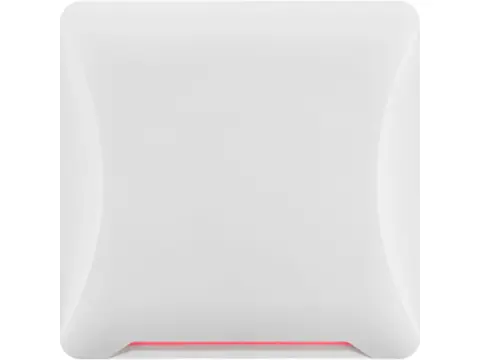
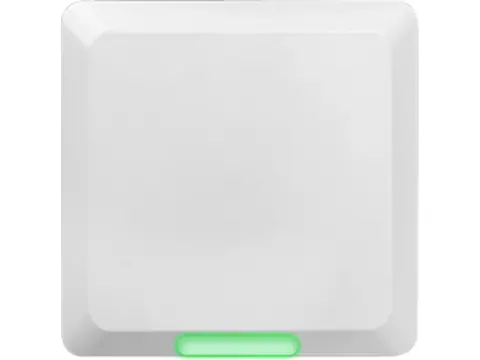
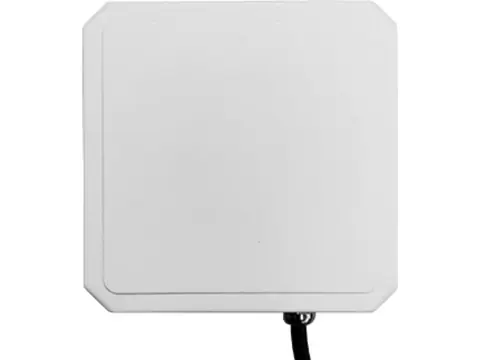
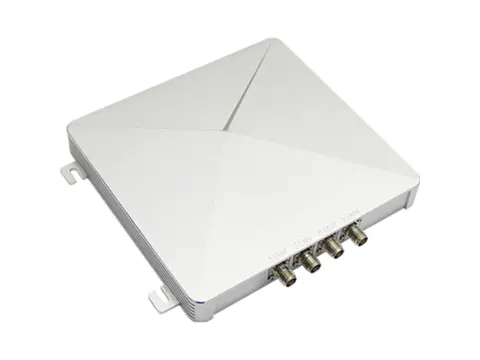
An RFID container seal is a one-time-lock seal, typically a steel-wire cable seal, with a passive UHF chip in its head. A yard-gate reader or handheld can read it and match it to the shipment record without anyone keying numbers by hand. Tamper evidence stays physical: once locked, the seal must be cut to come off. The chip adds a fast, machine-readable identity check. We supply UHF seal tags, handheld and fixed readers, antennas and encoding hardware for trucking yards, container depots, utility meter programs and valuables logistics.
What a seal has to prove, and where it gets hard
A seal answers one question: was this closed and untouched between two points? The places that ask it differ:
- Containers and trailers. Door seals on the locking bar handles, checked at depot and yard gates and at the destination.
- Tanker trucks. Seals on outlet valves and hatches after loading, checked before discharge.
- Utility meters. Seals through terminal-cover screws, recorded against each meter so a broken or swapped seal shows up at the next visit.
- Cash and valuables bags. A seal through the zip pulls, tying each bag to a pickup and drop-off record.
Printed seal numbers alone cause the familiar problems. Numbers get keyed wrongly, which triggers false alarms or hides a real substitution. Adding RFID brings its own challenges:
- Steel all around. Seal heads hang against locking bars, hasps and valve bodies, which detune UHF tags and reflect the signal.
- Awkward geometry. Container door seals sit at the rear, facing away from a reader as the truck pulls in.
- Substitution. A cut seal can be replaced by a lookalike with a copied printed number.
- Regional bands. Seals travel between countries that use different UHF bands.
- No network. Remote gates and meter routes often have poor coverage.
RFID seals, ISO 17712 and electronic seals
Three different things often get lumped together:
- ISO 17712 mechanical seals. ISO 17712 classifies mechanical freight-container seals as indicative (I), security (S) or high-security (H) from physical tests, with tamper-evidence requirements. A seal carries a class only when that design has been tested and certified; adding a chip does not change it. U.S. CBP’s C-TPAT program, for example, calls for ISO 17712 high-security seals on members’ loaded containers and trailers bound for the United States.
- Passive UHF RFID seals. The seals in this category. An EPC Gen2 (ISO/IEC 18000-63) chip answers when read, has no battery and keeps no record of when it was opened; the cut wire is the evidence.
- Active electronic seals. ISO 18185 covers battery-powered e-seals for freight containers that communicate on 433 MHz or 2.4 GHz and can report status. These are not in our range.
Unless a product page lists an ISO 17712 certificate, don’t treat a wire seal as ISO 17712 compliant. Use RFID wire seals for trucks, tankers, meters, bags and internal yard controls, and fit a certified high-security seal wherever a customs program or contract requires one.
How a seal verification system is laid out
The chain is seal tag → reader and antenna → yard, transport or meter software, applied across the life of each seal:
- Commission. At the issuing desk, a USB desktop reader/writer reads each seal’s factory TID and EPC and links them to the printed serial. Optionally, it writes your own number into the EPC and locks it. See how to encode UHF tags.
- Seal. At loading, a handheld reads the seal as it is applied, and software links it to the container or trailer number, booking, meter ID or bag.
- Verify. At the gate, a fixed reader or a handheld reads the seal and software compares it with the expected record. A mismatch or no-read sends the vehicle to the inspection bay.
- Close. At the destination, read the seal before cutting it, so the record closes against the seal that actually arrived.
Hardware selection by location
| Location |
Recommended hardware type |
Key spec to check |
| Seal issuing desk or stores |
USB desktop UHF reader/writer |
Regional band; EPC write and lock support; keyboard-emulation output or SDK |
| Loading dock or sealing point |
Android UHF handheld with 2D scanner |
Reads seal heads at arm’s length; barcode for documents; IP rating; offline storage |
| Yard or depot gate lane |
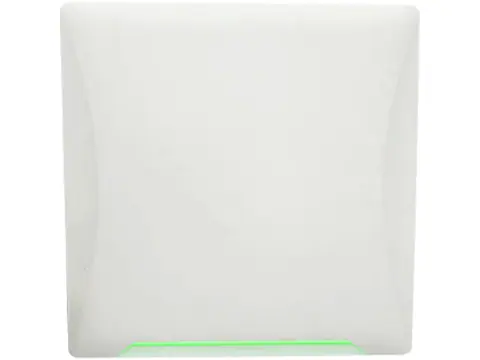
Fixed multi-port UHF reader with outdoor circular-polarized antennas aimed at the rear doors at the stop line |
Regional band; antenna height against door height; TCP/IP or RS232 to gate software; GPIO for trigger and signal light |
| Inspection or exception bay |
Android UHF handheld |
Range on the chosen seal head; app shows expected versus read seal |
| Tanker loading bay |
Handheld, or a fixed reader with a compact antenna near the valves |
Contained read zone so adjacent bays are not read |
| Utility meter routes |
Handheld with compact-head seals |
Close-range reads one meter at a time; app matches seal to meter ID |
| Cash center counter |
Desktop reader/writer or handheld at the counter |
Short read zone so only the bag on the counter is read |
Our seal and cable tie tags include one-time-lock steel-wire seals with a larger head rated for several meters with a fixed reader, and a compact head for close-range handheld checks. Plastic cable tie tags in the same category are for traceability, not security sealing. For antennas at gate lanes, see our UHF antennas.
Integration and installation notes
- Record three identifiers per seal. Store the printed serial, the factory TID and the EPC. A lookalike seal with a copied printed number won’t carry the same TID, and a copied EPC on a different chip won’t match the TID on record.
- Lock, but don’t rely on locking. Lock the EPC bank with an access password after writing. Locking stops rewriting, not copying, so keep a visual check of the seal and wire in the process. Where substitution is a serious threat, ask about chips with cryptographic authentication.
- Test on real doors. Seal heads hanging against steel read shorter than in open air. Test with your containers, valves and meters; circular-polarized antennas cope with the random orientation of a hanging seal.
- Plan the gate geometry. Rear door seals face away from an inbound reader. Place antennas where the doors will sit when the truck stops, trigger reading from a loop detector or photo-eye on the reader’s GPIO input, and use a handheld for anything the lane misses.
- Match each site’s band. Readers must suit the local band: 902–928 MHz under FCC rules, 865–868 MHz under ETSI and other bands elsewhere. See UHF RFID frequency by country.
- Plan for offline checks. Choose a handheld app that stores reads without coverage and syncs later.
- Get the protocol early. Ask for the fixed reader’s protocol document or SDK before gate software is built around it.
Typical bill of materials
Per issuing office
- USB desktop UHF reader/writer in the regional band
- Seal stock in the head size that suits how seals will be read, with printed serials if required
Per sealing point and inspection team
- Android UHF handhelds with 2D barcode scanning
Per gate lane
- Fixed 4-port UHF reader in the regional band
- Two or more outdoor circular-polarized antennas with low-loss coaxial cables
- Weatherproof enclosure and DC power supply
- Optional photo-eye or loop-detector input and a signal light on the reader’s GPIO output
Per meter crew or cash center
- Handhelds or a desktop reader/writer, plus compact-head seals
Not supplied: container OCR cameras, barriers, yard or transport management software, and active ISO 18185 e-seals.
Why source seals and readers from one supplier
- Seals matched to the read point. Head size, reader and antenna are chosen together, so gate seals read at the gate and meter seals read at arm’s length.
- Samples before volume. Test seals on your own doors, valves, meters or bags with the reader you plan to use.
- Compatibility checked before dispatch. We confirm the regional band, antenna connectors, cable lengths and reader interface, and we test before shipping.
- Mixed orders. Seals, handhelds, fixed readers, antennas and the desktop writer come in one quote and one shipment.
- Printing and encoding on request. Ask about printed serials and pre-encoded EPCs that match your numbering.
Next steps
Tell us the countries where seals will be applied and checked, what you are sealing (containers, trailers, tankers, meters or bags), monthly seal volume, how seals will be read (gate lane, handheld or both), any need for printed serials or pre-encoded EPCs, and the software and interface you use. We’ll propose seals and readers per site and can send samples for testing. Request a quote and we’ll reply within 24 hours.