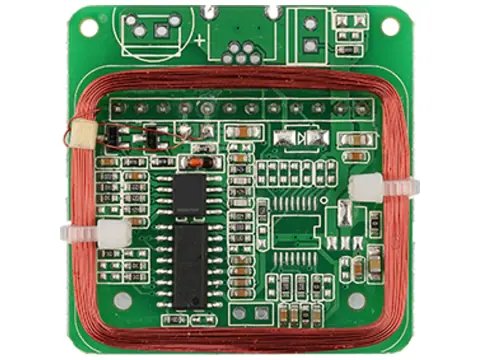
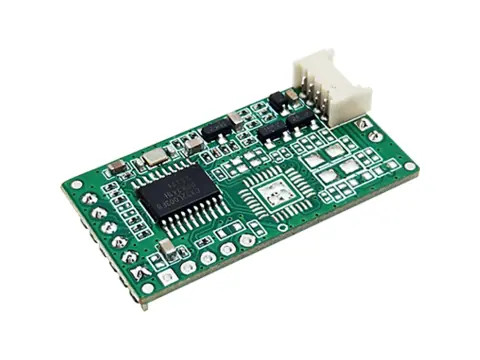
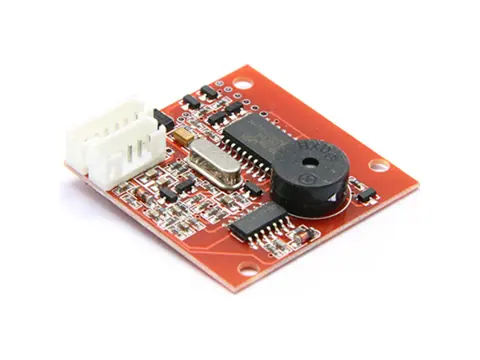
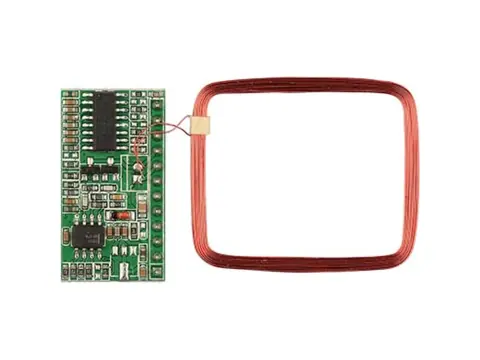
Most EV chargers that support card authorization use a 13.56 MHz RFID card or key fob: an embedded reader module reads the card’s UID, passes it to the charger controller over UART, and the controller sends it to the back end as the OCPP idTag. We supply both halves of that chain: reader modules for charger OEMs, and branded cards and fobs in bulk for charge-point operators (CPOs), property managers and fleet depots.
Two buyers, one credential chain
Charger OEMs need a module that fits behind the front panel, reads the cards their customers already carry and reports UIDs in a predictable format. Operators need thousands of cards and fobs that read first time on every charger in the network and whose UIDs can be loaded into the back end before cards are mailed.
Problems usually appear where the two meet. The same card can arrive as different strings depending on byte order or number format, 4-byte UIDs are not guaranteed unique, and some DESFire cards change their UID at every tap. Settle these details before ordering modules or printing cards.
How RFID authorization works in a charger
The chain is card or fob → antenna and reader module → charger controller → OCPP back end.
- Card or fob. A passive ISO/IEC 14443A credential. ISO 15693 and FeliCa cards appear in some markets.
- Antenna and module. The antenna sits behind a plastic or glass window in the front cover. The module reads the UID and sends it to the host, either automatically when a card appears or when the host polls.
- Charger controller. Firmware formats the UID, gives the user feedback on the display or LEDs, and starts the authorization.
- Back end (CSMS). Over OCPP 1.6 the charger sends Authorize with the idTag and, once accepted, StartTransaction. OCPP 2.0.1 uses an IdToken with a type field, for example ISO14443. If the connection drops, the Local Authorization List or authorization cache lets the charger still accept known cards.
Home and small private chargers often skip the back end and keep a short list of authorized cards in the charger itself. ISO 15118 Plug & Charge can authenticate the vehicle through the charging cable where the car, charger and back end all support it; RFID remains the common fallback.
ISO/IEC 14443-3 defines UIDs of 4, 7 or 10 bytes. MIFARE Classic 1K-compatible cards typically carry 4 bytes, while NTAG21x, MIFARE Ultralight and DESFire EV1/EV2/EV3 use 7. Here is one 4-byte UID, 3A 7F 12 C9, as different systems might show it:
| Representation |
Example |
Where you see it |
| Hex, bytes in read order |
3A7F12C9 |
Most UART modules and OCPP back ends |
| Hex, bytes reversed |
C9127F3A |
Some readers, apps and card-printing files |
| Decimal, read order |
0981406409 |
10-digit output on some desktop readers |
| Decimal, reversed bytes |
3373432634 |
10-digit output on other desktop readers |
| Wiegand 26 |
Only 24 of the 32 bits |
Access-control readers; avoid for charging |
A 7-byte UID becomes 14 hex characters, which fits the 20-character idTag limit in OCPP 1.6. Agree one convention (usually hex in read order, no separators) with the back-end provider, and set every module and enrollment reader to it. Our USB reader output formats guide explains byte order in detail.
Two more checks. First, 4-byte IDs include non-unique IDs (NUIDs), so a large public network is safer on 7-byte chips. Second, DESFire EV1 and later can be configured to present a random UID at each tap, which a UID-based charger will treat as a new card every time. See MIFARE Classic vs DESFire before choosing a secure card.
| Module format |
Footprint |
Antenna |
Host interface |
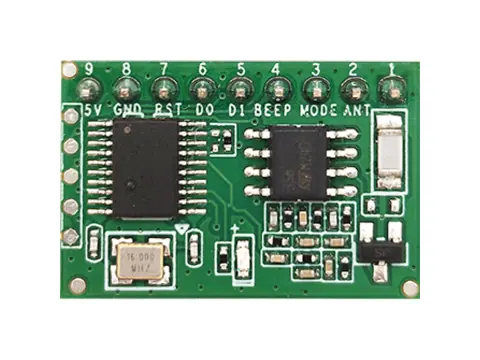
| Compact 13.56 MHz (ISO/IEC 14443A/B) |
30 × 16 mm |
External 50 Ω coil |
UART, 3.3 V TTL levels |
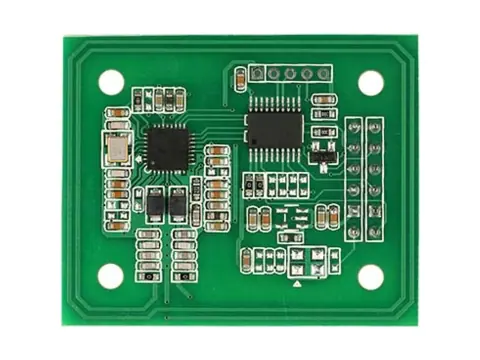
| Compact dual-frequency (125 kHz + 13.56 MHz) |
30 × 16 mm, same header as the HF board |
External LF and HF coils |
UART, 3.3 V TTL levels |
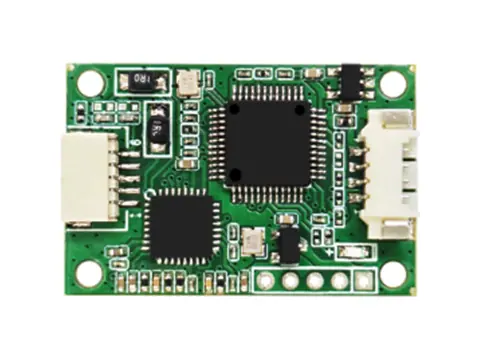
| Multi-protocol HF (14443A/B, 15693; FeliCa option) |
47 × 26 mm |
On-board or external |
3.3 V UART or Wiegand |
| USB PC/SC (CCID) module |
Varies by model |
External |
USB |
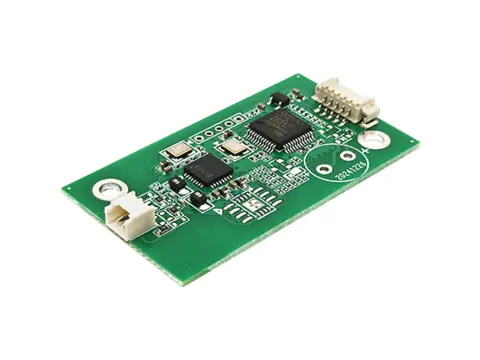
| Multi-technology badge reader |
Varies by model |
Varies by model |
UART or USB |
Browse 13.56 MHz NFC modules for charger designs, and multi-technology modules where chargers must accept existing corporate badges.
Hardware selection by charger type
| Location |
Recommended hardware type |
Key spec to check |
| Home or shared-garage AC charger |
Compact 13.56 MHz UART module + key fobs |
Firmware support for a local card list; 3.3 V logic levels |
| Public AC or DC charger |
13.56 MHz module + branded 7-byte-UID cards |
UID format and byte order; operating temperature |
| DC charger with Linux or Android HMI |
USB PC/SC (CCID) module |
Driver and SDK support for the operating system |
| Workplace or fleet depot |
Dual-frequency or multi-technology module |
Badge technologies already issued on site; UID or secure payload |
| Higher-security network |
HF module with SAM slot + DESFire EV3 key fobs |
AES key management; firmware support |
| Customer-service or enrollment desk |
USB desktop reader |
Output format identical to the chargers |
Integration notes for charger OEMs
- Antenna placement. 13.56 MHz couples through the magnetic field, so metal near the coil detunes it and shortens range. Keep the coil clear of metal and power stages, add a ferrite sheet behind it where metal is unavoidable, and measure read distance with the final cover fitted.
- Logic levels. Several modules take 5 V DC but use 3.3 V UART levels; level-shift if the host drives 5 V.
- Temperature. Compare the module’s rated operating range with the charger’s rating, allowing for heat behind a sunlit front panel.
- Radio compliance. Many modules have no approval of their own, so the charger is tested as a finished product under the EU Radio Equipment Directive, FCC Part 15 or your local rules. Ask for any available test reports early.
- Repeat reads. In auto-read mode, a card left on the reader keeps reporting; filter repeats in firmware.
Our RFID module integration checklist covers pinouts, command sets and sampling.
Branded cards and fobs in bulk
Put these in one RFQ for cards, key fobs and wristbands:
- Chip (NTAG213 or NTAG216, MIFARE Classic 1K-compatible, or DESFire EV3 on stainless fobs) and UID length
- Format: ISO/IEC 7810 ID-1 cards (85.60 × 53.98 mm), ABS or stainless-steel fobs, silicone wristbands
- Quantity per format and delivery split
- Artwork for both sides and finish
- Printed number: contract ID, sequential number or UID in the agreed format
- Pre-encoding, such as an NDEF link to your sign-up page on NTAG cards
- A UID list matched to printed numbers for back-end import
Typical bill of materials
Per charger (OEM)
- 13.56 MHz or dual-frequency reader module
- External antenna coil and cable sized to the front-panel window, if the module has no on-board antenna
- Ferrite sheet where the antenna sits near metal
Per network or site (operator)
- Branded cards and key fobs, plus spares for replacements
- USB desktop reader for customer service, set to the chargers’ UID format
- Optional DESFire EV3 key fobs and SAM-equipped modules for higher-security programs
Not supplied: chargers, OCPP back-end software and EMV payment terminals.
Why source modules and cards from one supplier
- Samples first. Test modules in your enclosure and cards on your chargers before volume orders.
- Format checked before dispatch. We confirm UID length and output format against your back-end convention and test before shipping.
- Mixed orders. Modules, antennas, cards, fobs and desktop readers share one quote and one shipment.
- Consistent batches. Reorders are quoted against the same chip, UID length and print format.
Next steps
Tell us if you build chargers or run a charging network, plus the card types in use, your OCPP version and UID convention, module interface and operating temperature, and card quantities with artwork. We’ll propose modules to sample or a card-and-fob specification. Request a quote and we’ll reply within 24 hours.