Elevator Access Control Readers
Elevator card readers for car panels and lift lobbies: anti-clone encrypted cards, QR codes for visitors, Wiegand or RS485 output to the floor controller.
Send us your controller model, card type and install environment. We'll shortlist compatible hardware and quote within 24 hours.
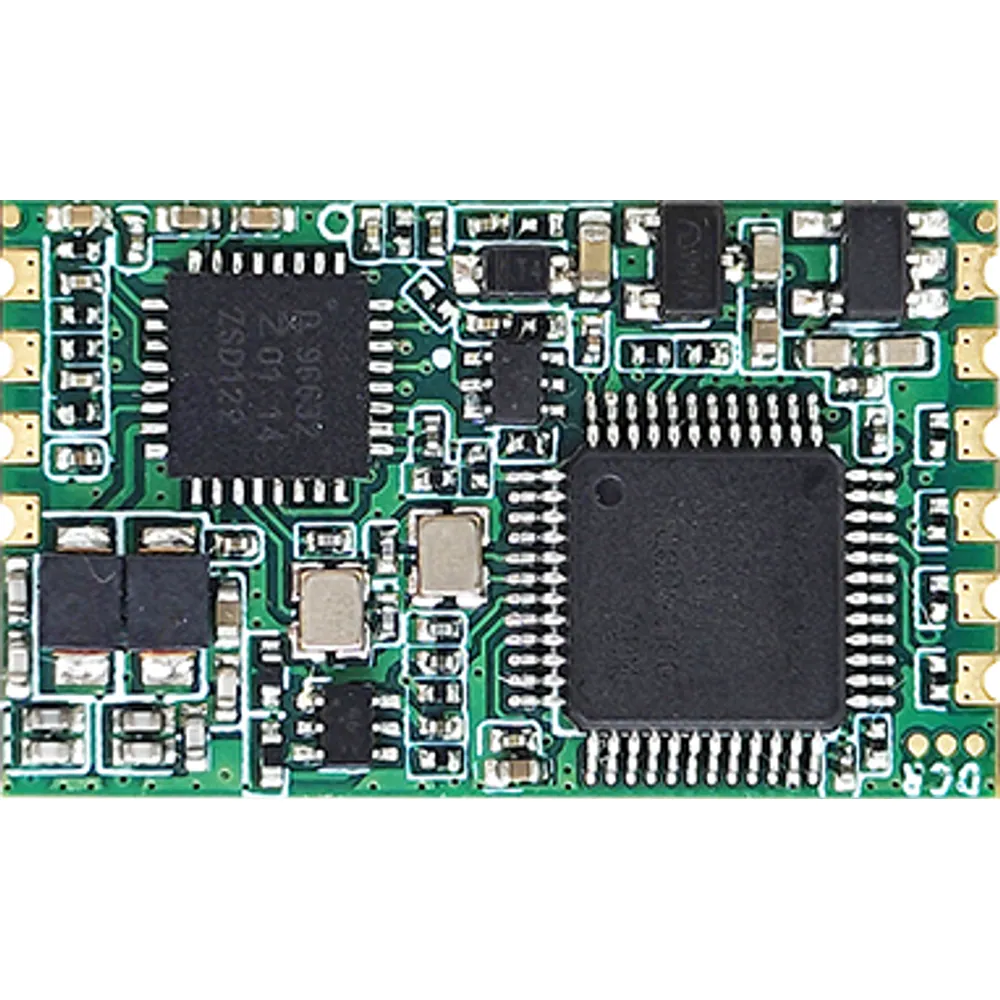
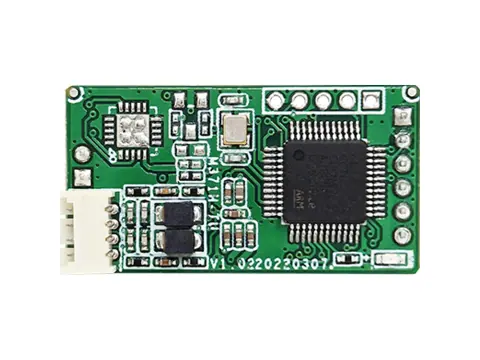
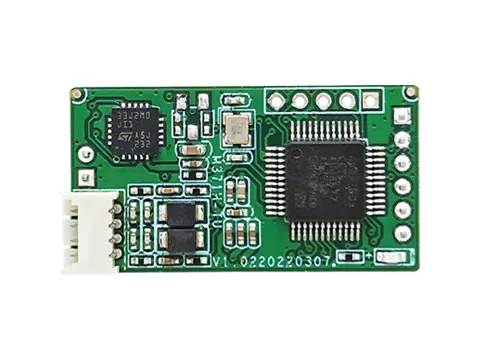
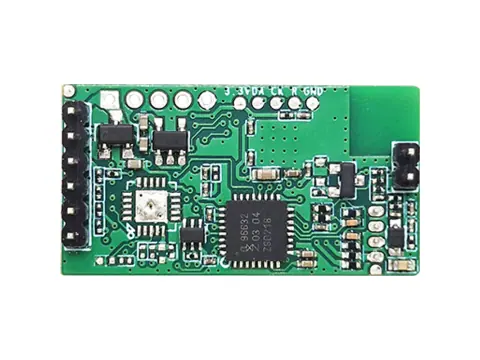
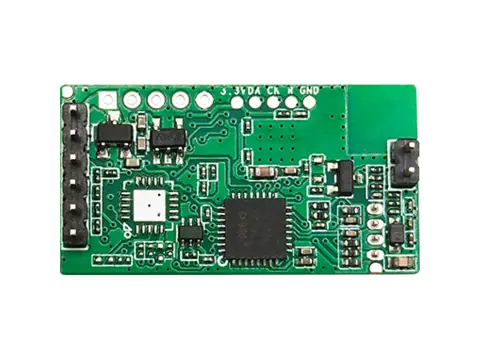
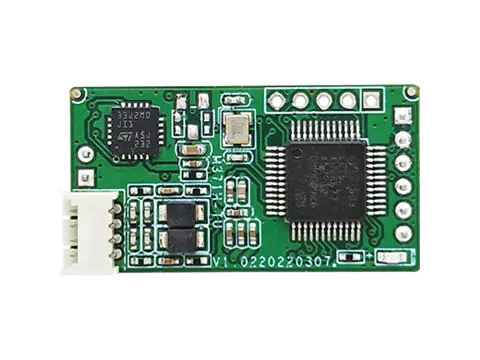
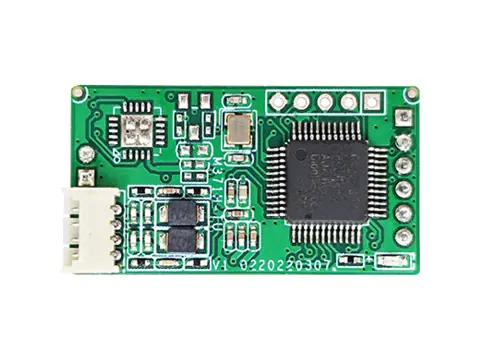
The smallest board in our multi-technology range: 25 × 15 × 3.0 mm and about 1.4 g, reading 125 kHz and 13.56 MHz credentials over 3.3 V UART or USB.
The XM-130 fits dual-frequency credential reading into a board only 25 × 15 × 3.0 mm and about 1.4 g. It is meant for products where a conventional module will not fit: slim mullion readers, handheld terminals, thin kiosk bezels and compact control panels. At 125 kHz it reads HID Prox-compatible and EM4100/4102/4200/4305/4450 credentials; at 13.56 MHz it handles MIFARE Classic, DESFire EV1/EV2, Ultralight and Ultralight C, FeliCa, ICODE, CEPAS, CPU cards and NFC Forum Type 1–5 tags.
At 3.0 mm tall it is roughly a third of the height of our 30 × 16 mm modules, which matters when the reader has to sit between a front cover and a display, battery or keypad membrane. Protocol coverage includes ISO/IEC 14443A/B, ISO/IEC 15693, ISO/IEC 18092 and FeliCa, and the module is rated from –40 to +85 °C.
The six host signals are USB D–, USB D+, UART RXD, UART TXD (3.3 V TTL), GND and 5 V DC, in that pin order — different from the 30 × 16 mm modules, so plan a dedicated footprint. The UART runs at 115200 bps and USB at full speed (12 Mbps). The four antenna pins carry the LF coil pair first, then the HF pair; specify a 490 µH ±10 µH coil for 125 kHz and a 50 Ω antenna for 13.56 MHz. Pad pitch is not part of the published data, so request the mechanical drawing with your samples. Current is ≤ 180 mA with the RF field on and ≤ 30 mA off, firmware updates run over the serial port, and CE, FCC, RoHS and Japan Radio Law approvals are listed for the module.
Third-party credential and platform names on this page are trademarks of their respective owners and are used only to describe compatibility.
| Operating frequency | 125 kHz and 13.56 MHz |
|---|---|
| 125 kHz credentials | HID Prox-compatible; EM4100, EM4102, EM4200, EM4305, EM4450 |
| 13.56 MHz credentials | MIFARE Classic, MIFARE DESFire EV1/EV2, MIFARE Ultralight, MIFARE Ultralight C, FeliCa, ICODE, CEPAS, CPU (microprocessor) cards, NFC Forum Type 1–5 tags; ISO/IEC 14443A/B and ISO/IEC 15693 cards |
| Protocols | ISO/IEC 14443A, ISO/IEC 14443B, ISO/IEC 15693, ISO/IEC 18092, FeliCa |
| Antenna | External: 50 Ω at 13.56 MHz; 490 µH ±10 µH at 125 kHz |
| Host interfaces | UART (3.3 V TTL levels) and USB |
|---|---|
| Data rate | UART 115200 bps; USB 12 Mbps (full speed) |
| Supported host OS | Windows 10, 8.1, 8 and 7; Linux; Android; macOS |
| Configuration & firmware | Management tool for configuration; firmware upgrade via serial port |
| Connectors | 6 host pins (power/UART/USB) and 4 antenna pins; pitch per mechanical drawing (on request) |
| Supply voltage | 5 V DC via host header, or 4.3–5.5 V via USB |
|---|---|
| Current, RF field on | ≤ 180 mA |
| Current, RF field off | ≤ 30 mA |
| Dimensions | 25 × 15 × 3.0 mm ±0.5 mm (antennas not included) |
|---|---|
| Weight | Approx. 1.4 g |
| Operating temperature | –40 to +85 °C (–40 to +185 °F) |
| Storage temperature | –40 to +85 °C (–40 to +185 °F) |
| Operating humidity | 10–90% RH, non-condensing |
| Certifications | CE, FCC, RoHS, Japan Radio Law (TELEC) — listed for the module; request reports |
|---|
| Pin | Signal | Function |
|---|---|---|
| P1-1 | DM | USB data – |
| P1-2 | DP | USB data + |
| P1-3 | RXD | UART receive (3.3 V TTL) |
| P1-4 | TXD | UART transmit (3.3 V TTL) |
| P1-5 | GND | Ground |
| P1-6 | 5V | Power input, +5 V DC |
| P2-1 | LF_1 | 125 kHz antenna, pin 1 |
| P2-2 | LF_2 | 125 kHz antenna, pin 2 |
| P2-3 | HF_1 | 13.56 MHz antenna, pin 1 |
| P2-4 | HF_2 | 13.56 MHz antenna, pin 2 |
Host pin order differs from the 30 × 16 mm modules. Pad pitch and footprint: request the mechanical drawing.
| Variant | 125 kHz | 13.56 MHz | iCLASS/Seos-compatible | BLE 5.1 | Mobile wallet | Size (mm) |
|---|---|---|---|---|---|---|
| XM-120-P-E | EM + HID Prox-compatible | — | — | — | — | 30 × 16 × 9.2 |
| XM-130-D-P | EM + HID Prox-compatible | Yes | — | — | — | 25 × 15 × 3.0 |
| XM-140-IC-M | — | Yes | Yes | — | — | 30 × 16 × 9.2 |
| XM-150-D | EM | Yes | — | — | — | 30 × 16 × 8.8 |
| XM-160-D-IC-N | EM + HID Prox-compatible | Yes | Yes | — | Listed (Apple Wallet) | 30 × 16 × 9.2 |
| XM-170-D-BT | EM | Yes | — | Yes | — | 30 × 16 × 8.8 |
| XM-180-D-IC-BT | EM + HID Prox-compatible | Yes | Yes | Yes | Listed (Apple Wallet) | 30 × 16 × 8.8 |
| XM-190-D-P-BT | EM + HID Prox-compatible | Yes | — | Yes | — | 30 × 16 × 8.8 |
| XM-200-D-P | EM + HID Prox-compatible | Yes | — | — | — | 30 × 16 × 9.2 |
13.56 MHz support = MIFARE Classic, DESFire EV1/EV2, Ultralight/Ultralight C, FeliCa, ICODE, CEPAS, CPU cards and NFC Forum Type 1–5 tags. All nine modules use external antennas and offer both UART and USB. Sizes in mm, antennas excluded.
Specifications can change between production batches. Confirm the current revision with us before placing volume orders.
Quote the SKU that matches your frequency, interface and mounting. Not sure? Send us your controller model and we will pick the variant for you.
| SKU | Configuration | Actions |
|---|---|---|
| XM-130-D-P | Ultra-thin dual-frequency module, 25 × 15 × 3.0 mm: 125 kHz EM + HID Prox-compatible, 13.56 MHz multi-protocol; UART + USB |
Elevator card readers for car panels and lift lobbies: anti-clone encrypted cards, QR codes for visitors, Wiegand or RS485 output to the floor controller.
Turnstile card readers, QR scanners and face terminals for tripod, swing and speed gates, with Wiegand, RS485, RS232 or TTL output to the gate board.
EV charger RFID cards, key fobs and 13.56 MHz reader modules for charger OEMs and operators: UID formats, OCPP idTag mapping and UART integration notes.
It is 3.0 mm high (±0.5 mm) on a 25 × 15 mm footprint, against 8.8–9.2 mm for our 30 × 16 mm dual-frequency modules.
No. The signals are the same — 5 V, GND, UART TXD/RXD, USB D+/D– and the LF and HF antenna pairs — but the order differs, so it needs its own host footprint.
HID Prox-compatible and EM4100/4102/4200/4305/4450 at 125 kHz; MIFARE Classic, DESFire EV1/EV2, Ultralight/Ultralight C, FeliCa, ICODE, CEPAS, CPU cards and NFC Forum Type 1–5 tags at 13.56 MHz.
Two external antennas: a 490 µH ±10 µH coil for 125 kHz and a 50 Ω antenna for 13.56 MHz.
Yes. Ask for the mechanical drawing when you request samples; pad pitch is not included in the summary data.
Compare Wiegand, OSDP and RS485 reader interfaces: wiring, cable limits, AES-128 Secure Channel and steps for a compatible access-control migration.
125 kHz cards are cheap but easy to clone; 13.56 MHz cards add memory and, on DESFire-class chips, AES security. Compare range, chips, security and migration.
Wiegand 26-bit is an even parity bit, 8-bit facility code, 16-bit card number and odd parity bit. Convert card numbers to hex and back with the calculator.
30 × 16 mm OEM module that reads 125 kHz EM and HID Prox-compatible cards plus MIFARE, DESFire, FeliCa and ICODE at 13.56 MHz, over 3.3 V UART or USB.
Our most complete module: BLE 5.1 plus iCLASS, iCLASS SE, Seos and HID Prox compatibility, EM, MIFARE/DESFire/FeliCa cards and NFC mobile credentials.
30 × 30 mm USB module that reads and writes LEGIC advant and LEGIC prime and also handles MIFARE, DESFire, MIFARE Plus, NTAG, FeliCa and ICODE credentials.
Dual-frequency OEM module listing iCLASS, iCLASS SE, Seos and HID Prox compatibility, EM and MIFARE/DESFire cards, and NFC mobile credentials incl. Apple Wallet.
Dual-frequency module with BLE 5.1 that reads HID Prox-compatible and EM credentials plus MIFARE, DESFire, FeliCa and ICODE, over 3.3 V UART or USB.
Dual-frequency module with BLE 5.1 for Bluetooth virtual cards and data pass-through, reading EM4100-family, MIFARE, DESFire, FeliCa and ICODE credentials.
HF-only OEM module listing iCLASS, iCLASS SE and Seos compatibility alongside MIFARE, DESFire, FeliCa and ICODE, with 3.3 V UART and USB on a 30 × 16 mm board.
Dual-frequency OEM module for EM4100-family and 13.56 MHz MIFARE, DESFire, FeliCa and ICODE credentials, without HID formats, on a 30 × 16 × 8.8 mm board.
Send your card type, interface and quantity. You get a quote, lead time and compatibility notes within 24 hours — samples available for most items.